
 Team TTO
Trinidad and Tobago Olympic Committee
Team TTO
Trinidad and Tobago Olympic Committee
Global sport must reinvent, become diverse (Trinidad and Tobago Guardian)
Global sport organisations are barriers to change.
Who is your son’s hero? (Trinidad and Tobago Guardian)
“When everyone’s mind is dulled or distracted, the leader must be doubly vigilant.” --Colin Powell
Understand the past to reshape future (Trinidad and Tobago Guardian)
All strategies without structure or proper execution will eventually fail but the brave will fall but never yield.
Murder and torture. The brutality of the Middle Passage from West Africa to the Caribbean. Inhumanity and wealth extraction, drowning in blood - the long shadow of British Slavery and Colonialism have been the foundation on which underdevelopment and persistent poverty have taken place in the Caribbean. A consequence of...
Read More: https://guardian.co.tt
Author: Brian Lewis
Stand up for racial equity, equality | Trinidad Guardian
The journey to overcoming structural racism is one where the deck is stacked. Speak your truth and face reprisal or bite your tongue- stay quiet and get along by getting by.
The fear of exercising our mind to its full potential
Yesterday we celebrated Emancipation day. Trinidad and Tobago was the first independent country to declare a national holiday to commemorate the abolition of slavery in the British Empire.
A disingenuous and dishonest people
We continue to tell a lie.
A life well lived
Growing up in Belmont in the 60s and 70s, my fondest memories are of a strong community, family and extended family values and spirit.
Progress cannot be rushed
There are so many different views about almost everything under the sun.
Change brings growth
As the citizens of the twin-island Republic celebrate on Thursday, Divali - the Festival of Lights which symbolises light over darkness and good over evil - it serves as a reminder of the multicultural, multi-ethnic, multi-racial reality of Trinidad and Tobago.
Change or be Changed - A new world sport order
FIFA’s new proposal upturns international sports status quo
Focus on the controllables
COVID-19 is proving, or maybe that should be providing, a significant test in so many ways. Certainly, it's a mental and emotional test.
End cover-up culture
John Geddert's suicide was an "escape from justice" and 'traumatising beyond words," said Sarah Klein, a former gymnast who trained under the US Olympic coach. Geddert died by suicide Thursday after Michigan authorities announced several charges against him, including human trafficking.
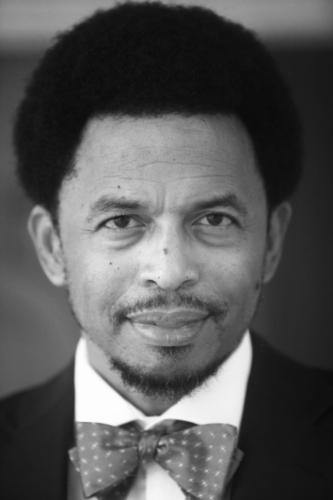
PRESIDENT OF CARIBBEAN OLYMPIC COMMITTEES SHARES GLOBAL STRATEGY TO COMBAT DISCRIMINATION IN SPORT AT THE 2021 VIRTUAL SPORT FOR LIFE CANADIAN SUMMIT
Amidst a global reckoning on the realities of systemic racism, experts from the highest ranks of the international sport system are strategizing a better way forward. Sport for Life is thrilled to announce that keynote speaker Brian Lewis, the current president of the Trinidad and Tobago Olympic Committee (TTOC) and Caribbean Association of National Olympic Committee (CANOC), will be sharing insights into his work as chair of the Sport Integrity Global Alliance (SIGA) standing committee that is committed to combat discrimination in sport.
Adopting to the sisu philosophy
How to be a force for good in a world turned upside down by the unprecedented covid-19 pandemic.
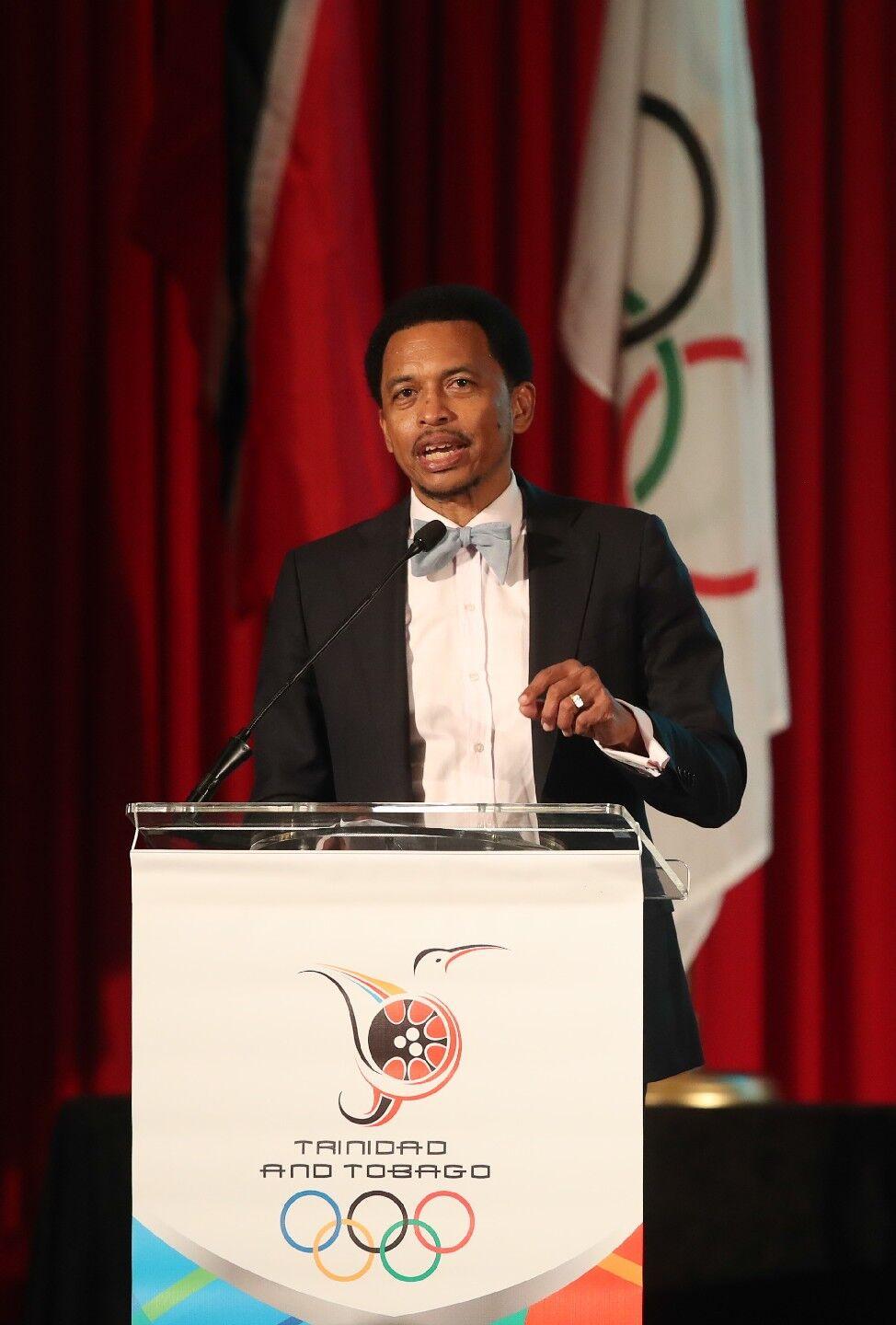
Lewis: Time for a female IOC president
TTOC boss makes case for more women in decision-making roles.
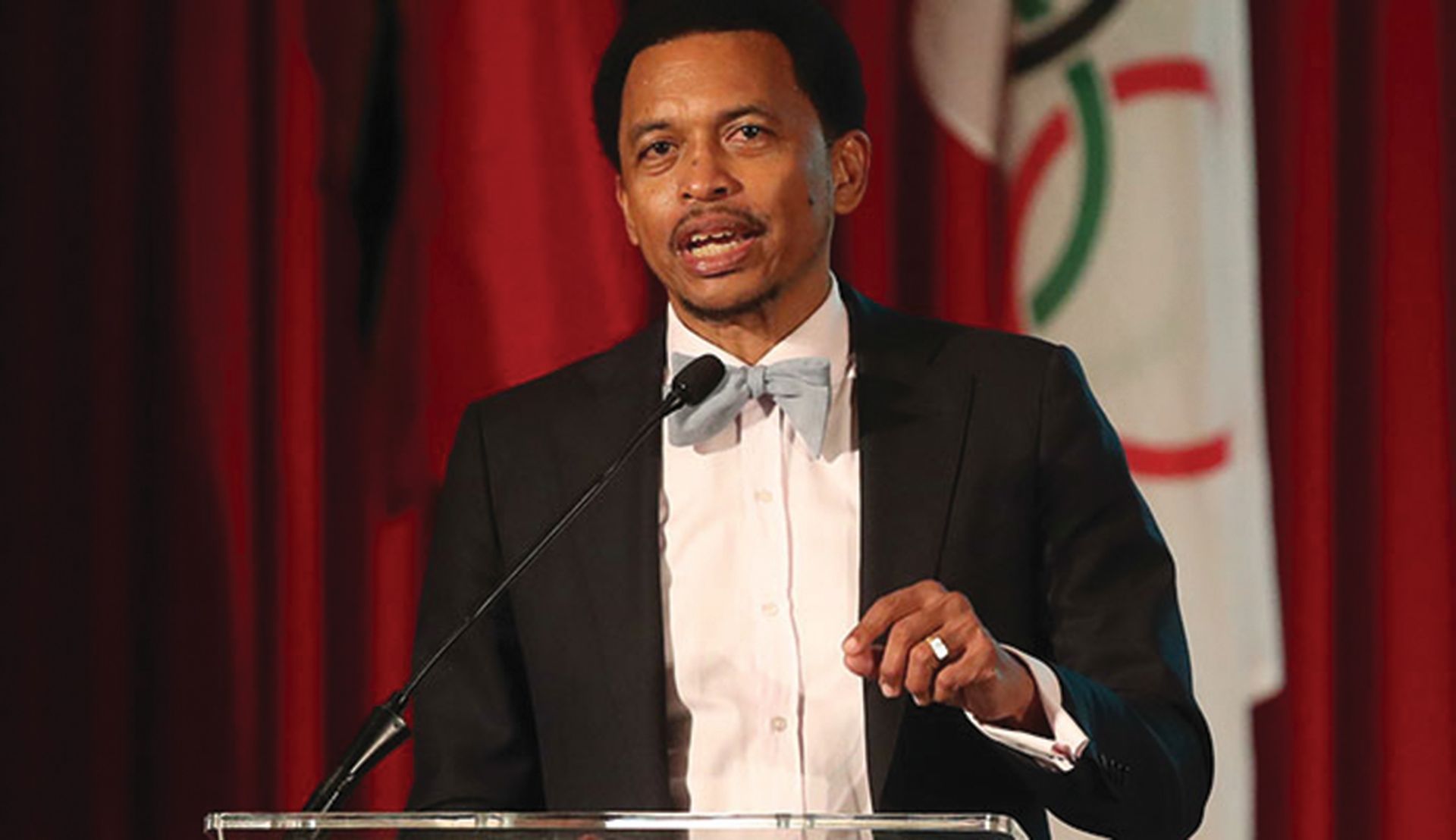
Lewis: Our athletes will not be affected more than any other
Brian Lewis, president of the T&T Olympic Committee (TTOC) said this country’s athletes will be affected no more than their international counterparts from the International Olympic Committee’s (IOC) decision to limit the stay of athletes at the Olympic Village.
The Olympic online website yesterday revealed that athletes will be expected to arrive in the Tokyo 2020 Athletes’ Village five days prior to their competition at Tokyo 2020 and depart a maximum of two days afterwards.
IOC president Thomas Bach said: “The International Olympic Committee (IOC) confirmed it had requested National Olympic Committees (NOCs) to adapt their arrival and departure plans to fit in with these new rules designed to reduce the risk of coronavirus.”
He noted also following an executive meeting, that the decision was taken to minimise the number of people living in the Athletes’ Village.
“We think that this is absolutely necessary because we need to reduce and minimise the number of residents in the Olympic Village to minimise the risk of COVID exposure,” Bach said.
But Lewis explained that T&T’s athletes will not be affected more than any other, saying: “No one country would have an advantage over the other. The COVID-19 has resulted in the shutting down of sports and very strict public health guidelines and lockdowns etc so it’s the reality of COVID-19.
“The T&T Olympic Committee, we have been preparing and looking at different scenarios with our medical team, the Chef de Mission Ms Lovie Santana, and we have been having ongoing meetings so it’s not an unexpected situation, at the end of the day the priority of the Olympic Committee remains the safety of our athletes, coaches administrators, medical team etc, so we are focused on meeting whatever counter-measures that the Tokyo Olympic organisers put in place, along with the IOC executive.”
Lewis and his team at the TTOC have been in constant contact with the local athletes and finding ways to ensure they would be fully fit and ready when the Games begin.
“We are looking at making the necessary adjustments to our pre-Games training camp, and we have to make the necessary logistical adjustments, and we are working closely with our travel consultant Denise Dyer on that so no surprises there, we anticipated different scenarios once the IOC confirmed the Games are on.”
Though the IOC wants to reduce the spread of the coronavirus, Bach said they still wanted to ensure athletes gained the experience and acclimatise: “At the same time, we wanted to maintain the athletes’ experience. We wanted to be balanced with the considerations about athletic performance and also with attendance at the Opening Ceremony.”
The guidance advises that in cases where travel time to Japan and time difference is minimal, the number of days spent in the Olympic Village prior to the competition should be shorter.
Where possible, athletes are expected to acclimatise to the time differences in pre-Games training camps in Japan rather than in the Olympic Village.
Racial divide and rule can be overcome with open and frank dialogue about this country's true history
I am optimistic that Trinidad and Tobago will be a better country and society and that the current post election racial discord is a necessary and uncomfortable conversation that as a society we must have .
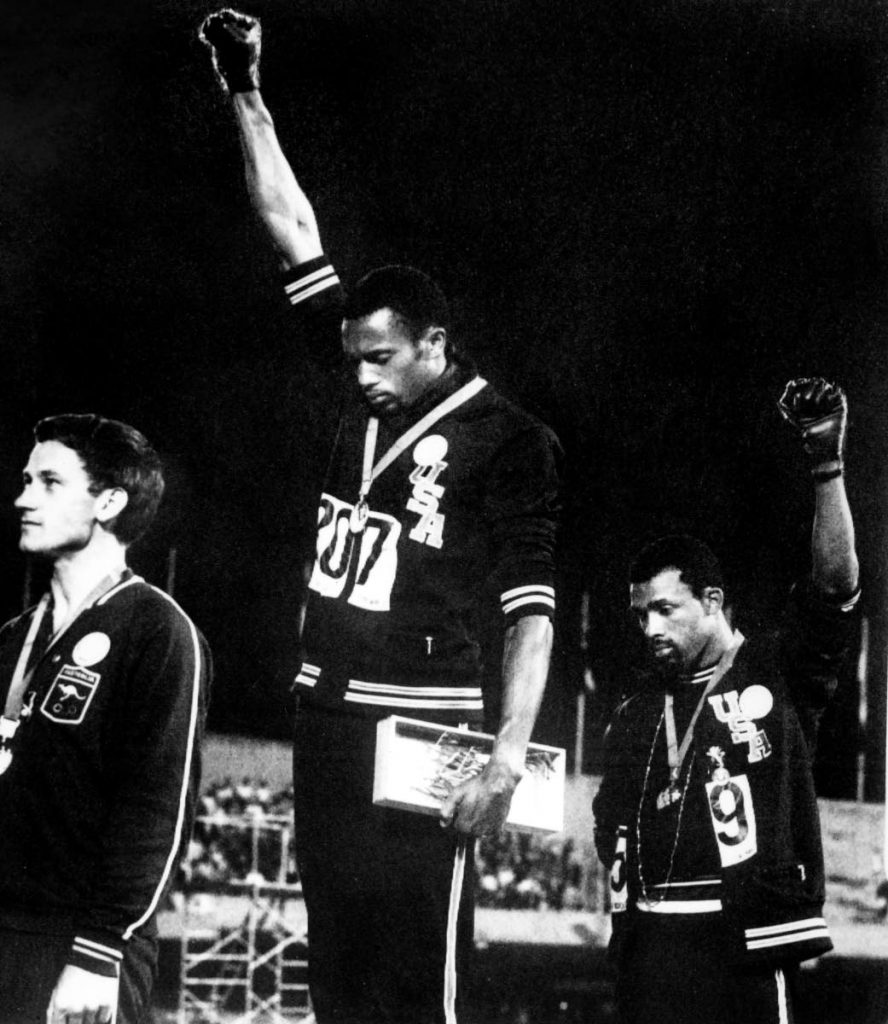
Lewis: IOC must acknowledge Rule 50 was racially-fuelled
BEFORE any amendment is made to Rule 50 of the Olympic Charter, the International Olympic Committee (IOC) must firstly acknowledge the fact that this decree was built on the pillars of racial discrimination and inequality.
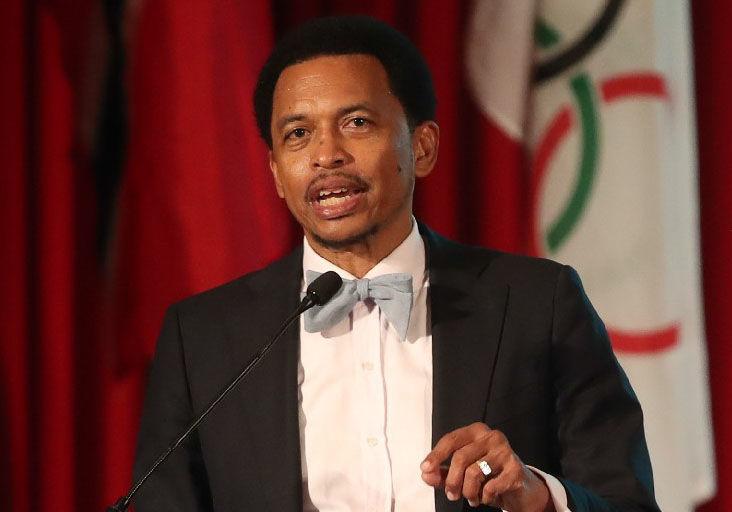
A sports-base approach is needed to help the youth
Last week, Trinidad and Tobago faced its own Black Lives Matter (BLM) day of reckoning. The lives of PC Allen Moseley, Joel Jacob, Noel Diamond, Israel Clinton and Ornella Greaves had all the elements of our nation on edge. Guns and bullets.
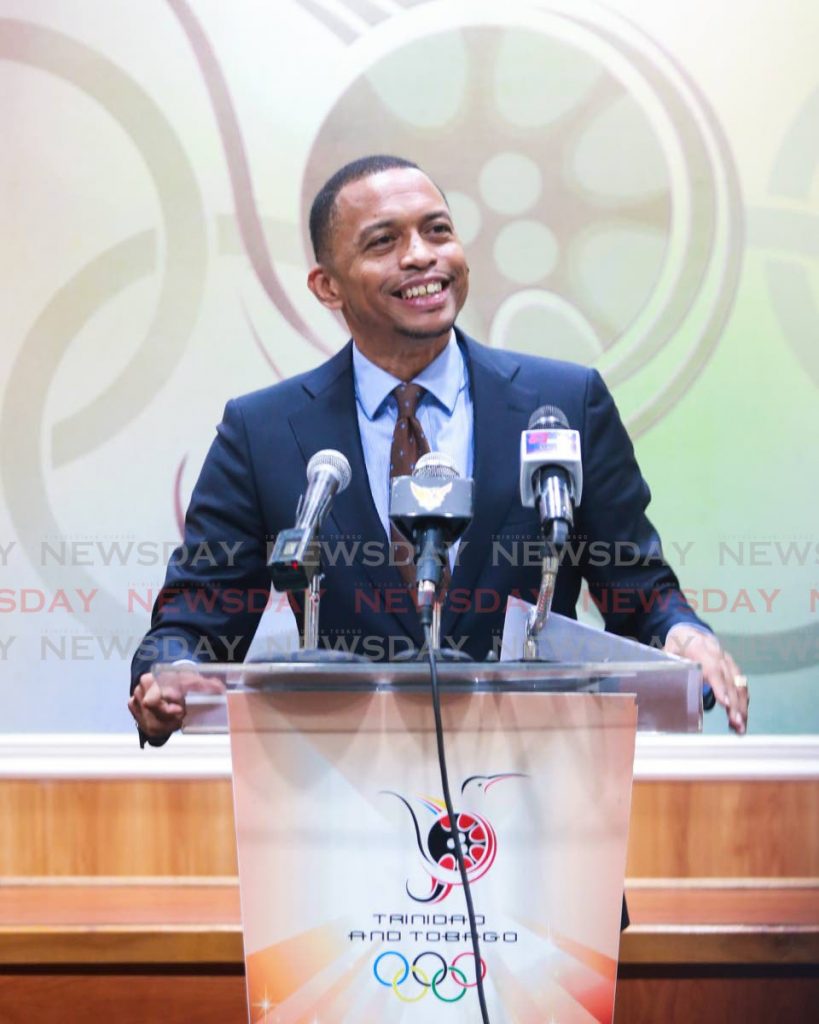
TTOC head: 'Root out gender, racial inequality'
FUNDAMENTAL change is needed across the board, if TT, as a nation and people, wishes to eradicate the gender and racial inequality currently plaguing the society.
Do not flinch in the face of adversity
Prime Minister Dr Keith Rowley’s announcement that phase three of the reopening of the T&T economy during the coronavirus (COVID-19) pandemic restrictions began on Monday was met with welcome relief by many citizens but mostly the business sector.
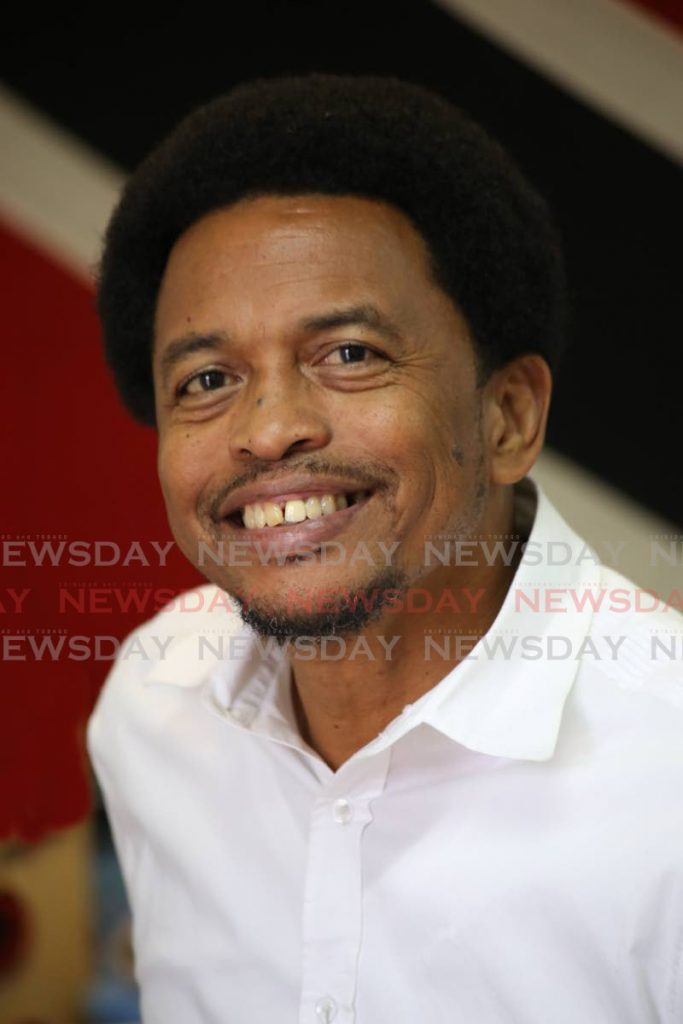
Lewis: Sport can be key in covid19 recovery
BRIAN LEWIS, president of the TT Olympic Committee (TTOC), says that sports can play a vital role as TT recovers from the global coronavirus pandemic.
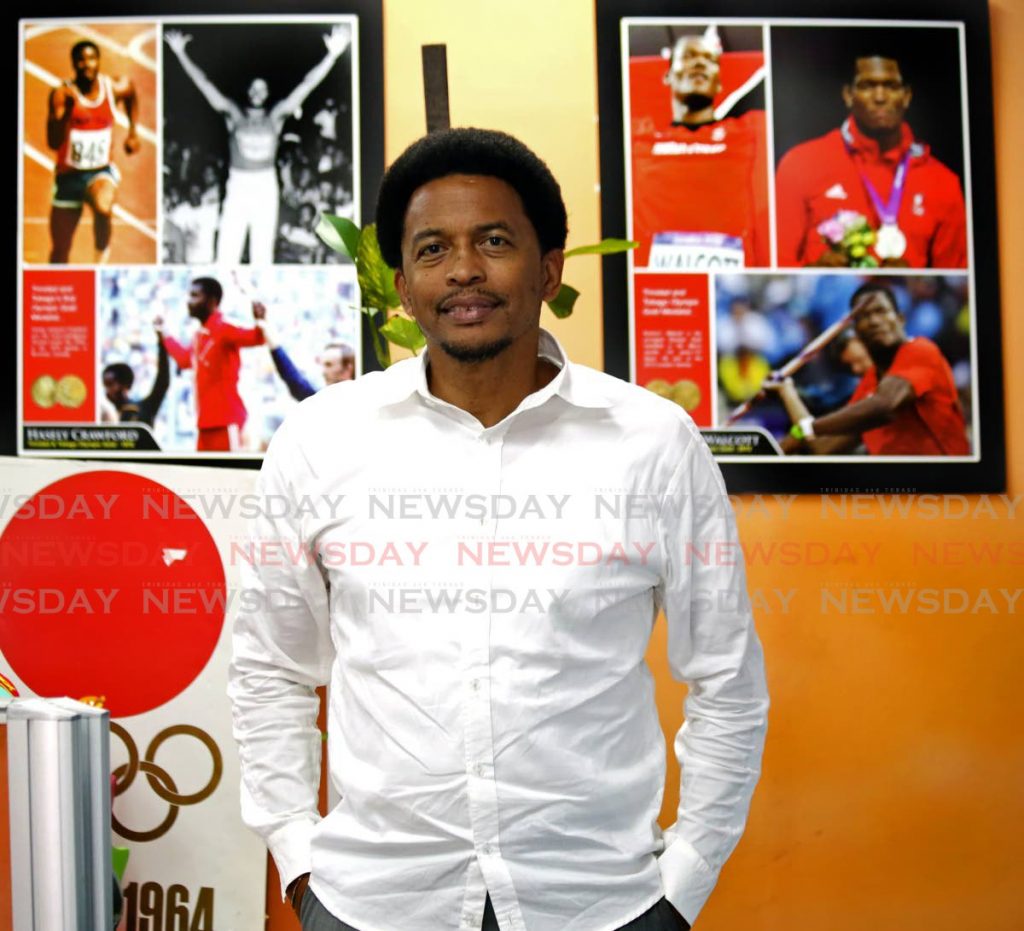
Lewis: We need a culture change
SELF REFLECTION and culture change during the current downtime are the primary elements which can aid society’s swift reintegration, in the post-covid19 period.
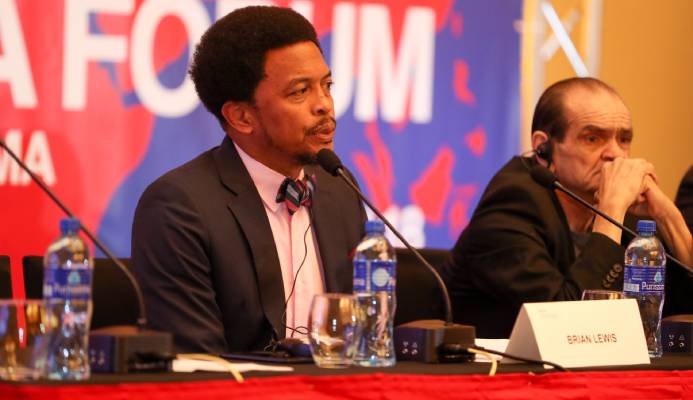
TTOC president Lewis calls for a sense of urgency in respect of greater gender equality at leadership and decision - making level in Olympic movement
The 10th President of the International Olympic Committee (IOC) should be a woman, that is the unwavering view of the Trinidad and Tobago Olympic Committee (TTOC) President.
Paul, Campbell urge young athletes: Never give up on your dreams
Young national cycling sensations, Nicholas Paul and Teneil Campbell, are encouraging young, up and coming athletes to work hard to achieve their goals and to never give up on their dreams.
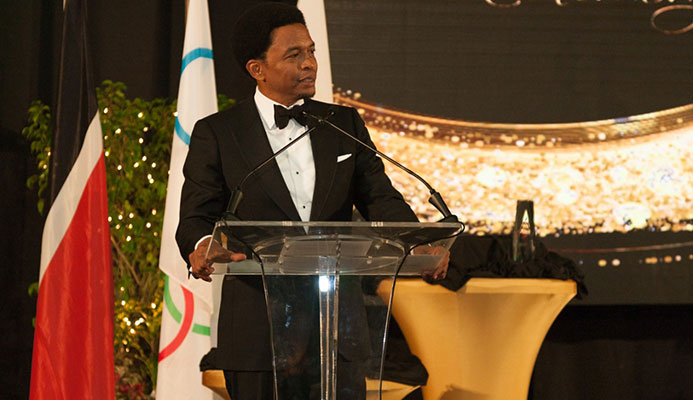
TTOC President looks forward to closure on cancelled Caribbean Games
Brian Lewis, President of the Trinidad and Tobago Olympic Committee says he is looking forward to the indication that there will finally be closure on the Caribbean Games saga.
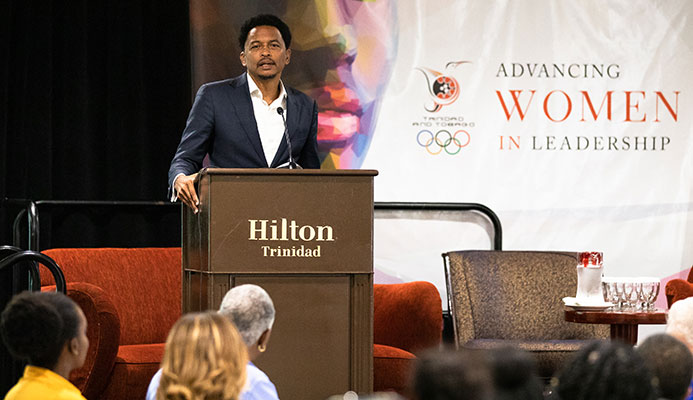
ANOC puts spotlight on World Beach Games
The Association of National Olympic Committees (ANOC) World Beach Games is aimed at building a new frontier for the Olympic movement.
Dismantling Sport's Racism and Sexism Taboo - Its Time To Level The Playing Field
Racism, classism, sexism and elitism are taboo issues in global sport. Is Trinidad and Tobago an exception?
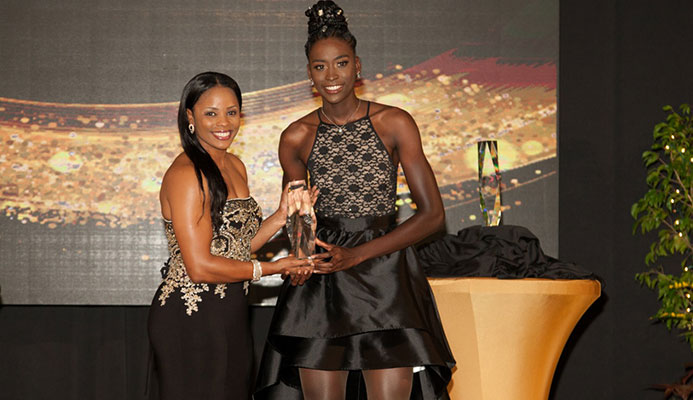
T&T Sport Strategy Can Benefit From Oxford Business Group Report
I happen to be initially browsing but having caught my attention, I then perused thoroughly, the 2018 Oxford Business Group country report on Trinidad and Tobago. There were a number of perespectives, snap shots and overviews written. If one wanted to get a well researched and documented overview of the economic and business landscape within the twin Island Republic.
The Caribbean Association of National Olympic Committees (CANOC) isn't on the radar of many people in the Caribbean - media included.
31 July is CANOC day. A message was sent out. That it barely registered or caught the attention of sport stakeholders in the Caribbean is an opportunity not a slight. CANOC must embrace the opportunity to heighten awareness and engage in enhanced outreach to provide information about the organisation.
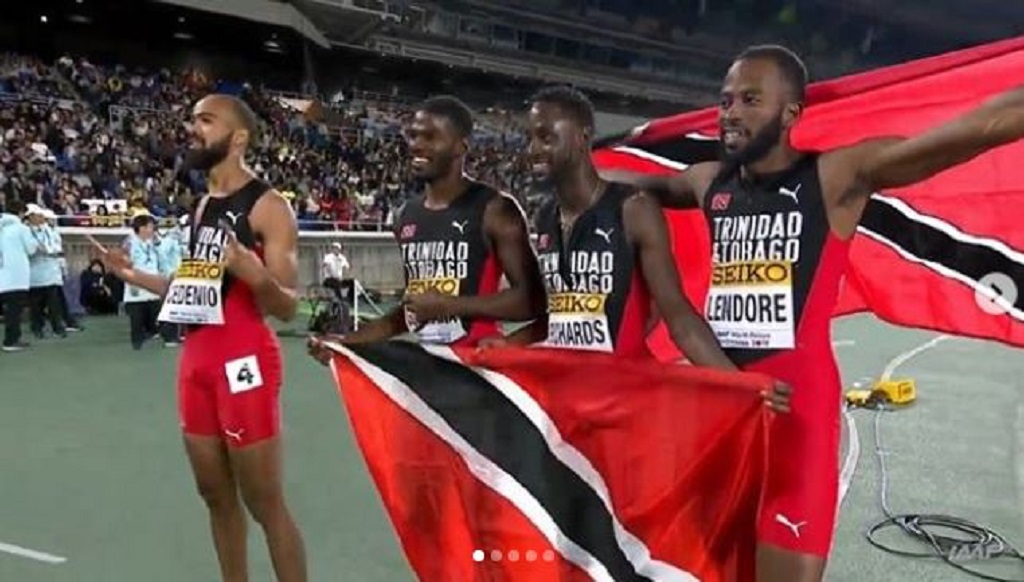
Allow Our Athletes The Space to Dream of Olympic Glory...
It is cold in Lima, Peru, host city of the 2019 Pan Am Games. In fact, it is winter here in the South American nation.
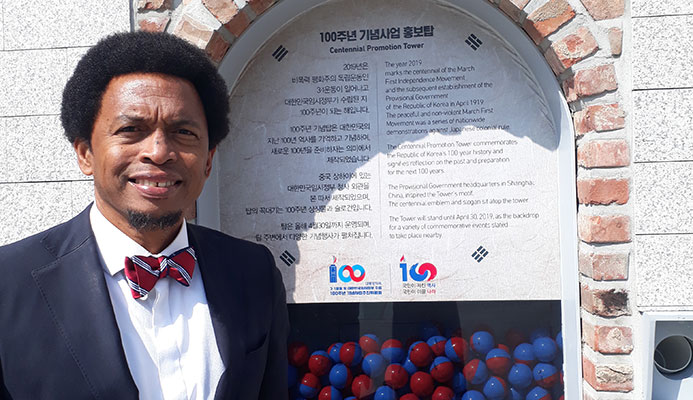
Try a little harder
I came in for some withering criticism recently for adopting the position, that as painful as it is, the current intolerable crime situation is an opportunity for T&T to recalibrate.
SEA’s negative impact on young athletes
It is an uncomfortable reality that the concept of fairness and equality can be transactional.
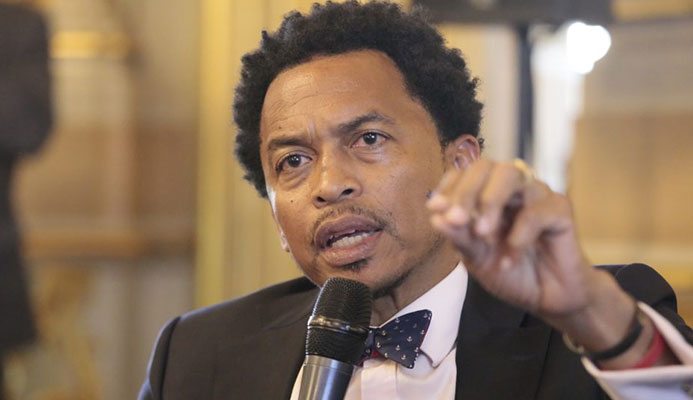
Poor Governance is Destroying Sport. Can the Nolan Principles Restore Good Governance and Ethical Leadership?
It can be tiresome. The question begs to be asked. What are you doing?
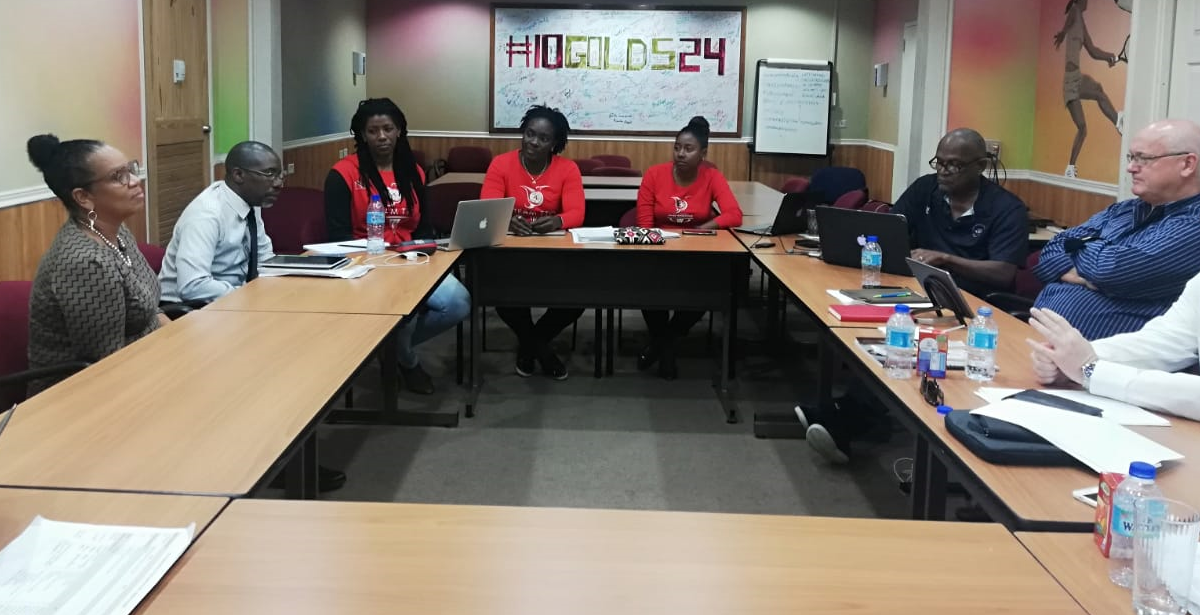
The 2021 Commonwealth Youth Games is heading to Trinidad and Tobago.
The voices of Young People Key to Trinidad and Tobago winning the Bid. It's their Games.
Fidel Castro once said, "a revolution is a struggle to the death between the future and the past".
Sports governance coaching is here
Recently I had the opportunity to meet with Theresa Minnie - head of Outreach at the ICSA - the Governance Insitute. She was visiting from the United Kingdom and here to be one of the main presenters at a Governance workshop hosted by the local arm of ICSA. The workshop was held at the Chamber of Commerce building, Westmooring, Port-0f-Spain recently.
IOC Leads Way With Marketing Strategy
The Olympic Partners (TOP) programme is the highest level of Olympic sponsorship, granting category exclusive marketing rights to the Sunmer, Winter and Youth Olympic Games to a group of global partners.
Breaking down boundaries using sports
Sport is a way to explore life's big issues.
Caribbean Athletes, Legal Marijuana - Managing The Risk
"Marijuana/Cannabis has deep historical, cultural and religious significance to Caribbean peoples"- Rose-Marie Belle Antoine.
We don't want to talk about it because of how it will look and what people will say. Call it what you want- ganja, joint, weed, pot, grass, herbs, marijuana or cannabis. Its on the agenda.
Build your sporting brand
Sports stakeholders need to stop lamenting about the perceived lack of sport sponsorship from corporate T&T.
Making Effective decisions
The decision-making process is a critical aspect of sport governance. All of us make decisions every day. What to wear, what to eat, may be simple decisions depending on where you are at a particular point in your life cycle.
Corruption hurting our sports
Bold faced and corrupt villains are perceived to operate with impunity, as the cancer that is corruption takes its toll on almost every aspect of life here in Trinidad and Tobago. This, as billions of dollars went in and out of the treasury.
A Cry For Help For The Youth
Each man's death diminishes me,
For I am involved in mankind.
Therefore, send not to know
For whom the bell tolls,
It tolls for thee - John Donne.
CRITICISM IS ASSURED....
Sometimes its difficult to separate fact from fiction. There are those who will smile to your face and as soon as your back is turned they will have the most negative things to say. In a very real way its not unexpected.
Advice from a champion
"It's not a sacrifice, it's a choice," says history-making American track sprinter Lauryn Williams. Williams was making the point in an interview about the challenges athletes have to face. A credible voice giving real and needed advice - an athlete who has seen life from the perspective of a contracted track and field star and as a free agent bobsleigh competitor.
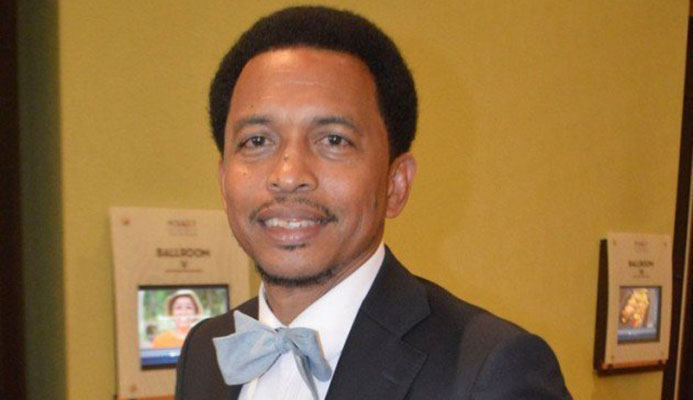
Fakoory, Monteil and Nipsey Deaths Hit Hard.
During the last three weeks certain things have occurred that caused me to reflect on life and living life mindfully. How do you find inspiration and motivation when the going gets tough and you feel as if nothing you do at a particular point in time, is making any sense and creating a positive difference?
Olympic and Commonwealth Sport Bodies Must Make Risk Management A Priority.
Risk management is an essential element of good governance. The failure to analyse and access risks can place a sport organisation -the size or stature does not matter - at risk.
Stagnant NSOs must transform or perish
The book "Sports Governance" by Russell Hoye and Graham Cuskelly gave in-depth focus on the governance of non-profit sports organisations and the practices employed by the boards/committees to carry out their governance role.
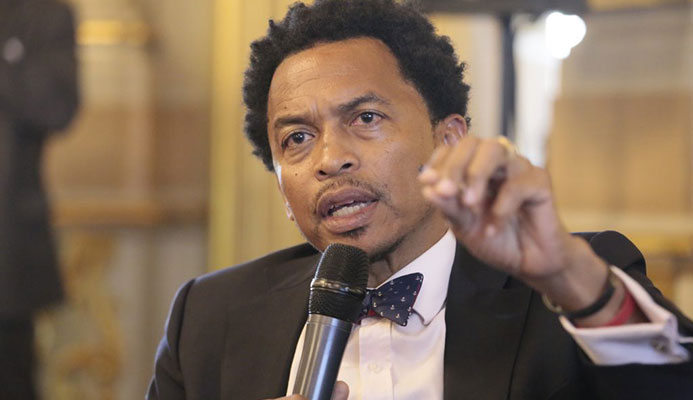
Fearless advocates for good sports governance
Thought leadership.
To have people with whom you can share thoughts an ideas with and receive constructive criticism when needed that is founded on knowledge and a proven practical success track record is invaluable.
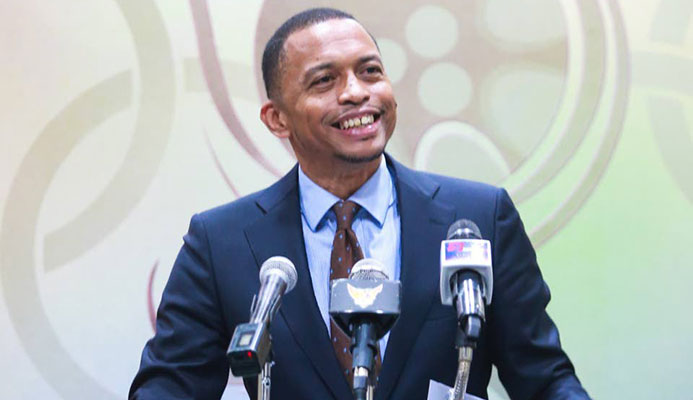
Local sports far from reaching full potential
On March 25, 1807, parliament in London, England, passed a law formally abolishing the slave trade in the British Empire. However, slavery didn't end then freedom for existing slaves did not come in the British territories until 1838.
Gibraltar or Trinbago 2021?
It's hugely significant in the context of Trinidad and Tobago's sports history. Hosting a multi-sport event can be a positive catalyst. We were entrusted with the responsibility to develop and present the Trinidad and Tobago Commonwealth Youth Games bid concept and vision and why Trinidad and Tobago. Today we use this column to share our ideas and thoughts.
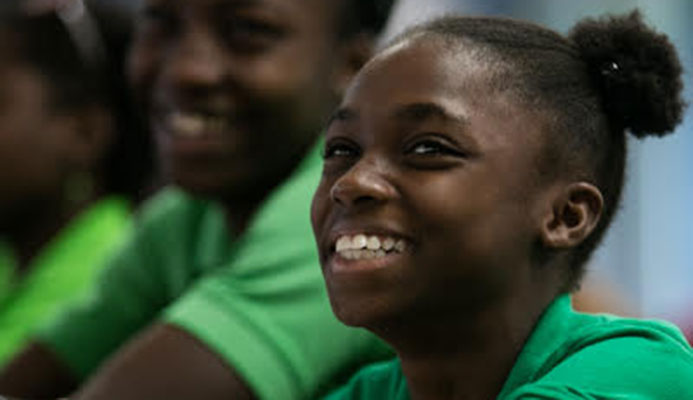
In The Service of Youth, Young People
For The Trinidad and Tobago Olympic Committee (TTOC) and the Trinidad and Tobago Commonwealth Games Association (TTCGA) taking a stand for athletes, youth and young people is a daily struggle. Each and everyday people manifest issues by their behaviors that create difficulties and problems for athletes, youth and young people.
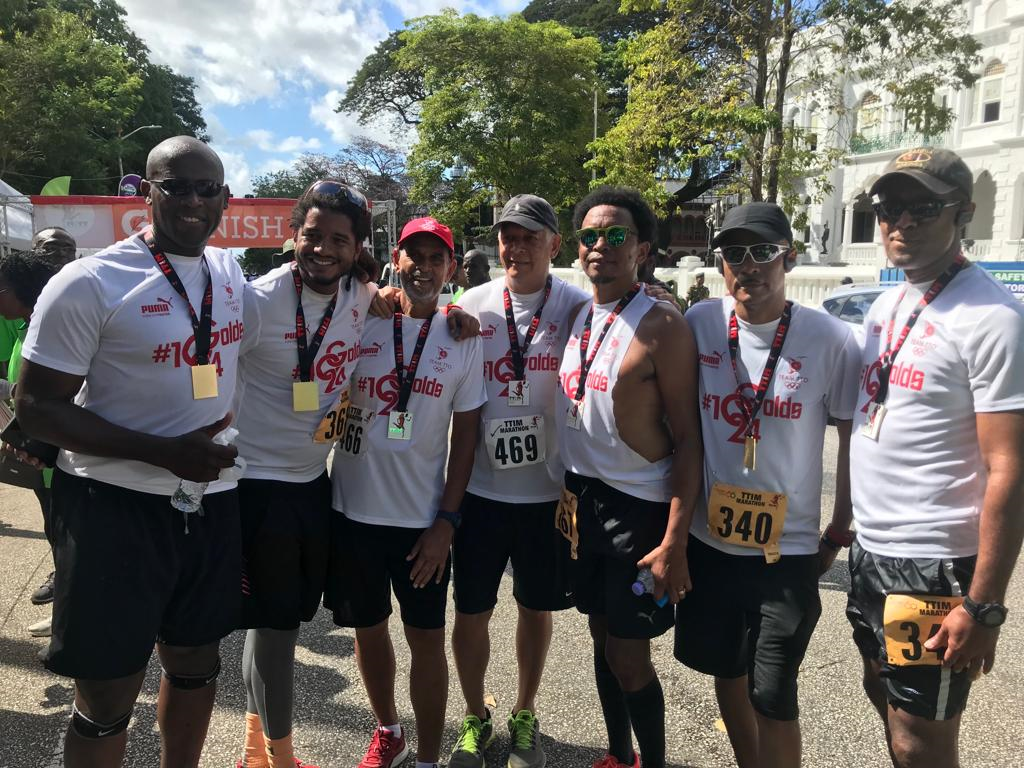
There are easier ways to support #10golds24 but the TTOC marathon walk continues to Entice!
The 37th edition of the Trinidad and Tobago International Marathon (TTIM) on Sunday 27th January started in the pre dawn hour for the walkers including the Trinidad and Tobago Olympic Committee (TTOC) and the Trinidad and Tobago Commonwealth Games Association (TTCGA) marathon walk group . The purpose of the marathon walk is to raise awareness and financial support for the TeamTTO (Team Trinidad and Tobago) #10golds24 athlete welfare and preparation fund.
Lewis: We can’t wait until 2020 to help
Team TTO raises awareness for athletes’ fund at TTIM
The 3Ws of the Olympic Movement
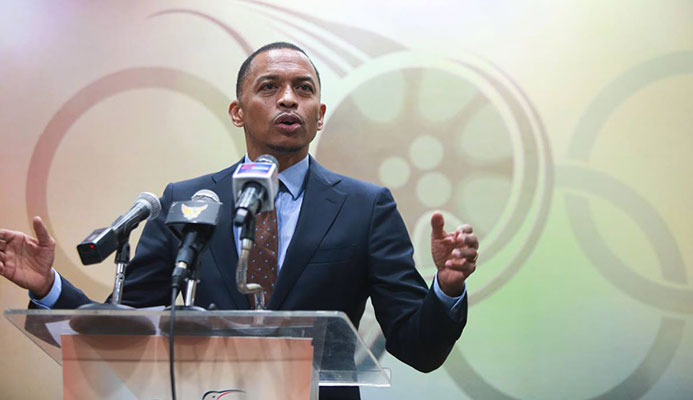
Ever so often it is necessary to remind or introduce the citizens of Trinidad and Tobago to factual information about the Olympic Movement. The who, what and why. What is the purpose of the Olympic Movement? The movement is of long standing. Its history can be traced back to the year 776 BC.
Stop Taking Trinidad and Tobago for granted...
We are taking Trinidad and Tobago for granted!
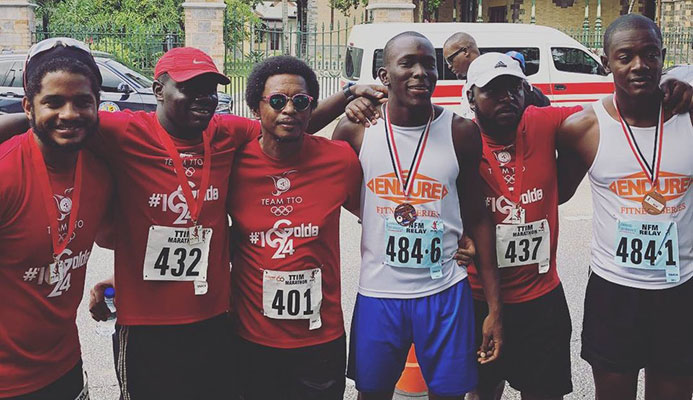
Marathon day coming!
Christmas! Christmas! It's Christmas time in T&T. For many people, nothing beats a "Trinbago" Christmas. It is the best!
Seeking out positive role models
On Saturday last, I had the distinct pleasure to attend the Association of Female Professionals of T&T (AFETT) and Youth reception to launch the organisation's youth arm.
Olympic movement faces hard decisions
In business, the changing market realities and the disruption of traditional industries are compelling business leaders and stakeholders to review every aspect of their operations.
Time to get real
A good friend had cause to remind me that "uneasy is the head that wears the crown".
Let's all share the road please!
T&T is in a difficult place right now and it is important to remain positive.
Overcome the fear of failure
Being thrown under the bus is not something that gives me sleepless nights or undue worry.
Lewis re-elected CANOC president
TT Olympic Committee (TTOC) president Brian Lewis will continue to also hold the post of president of the Caribbean Association of National Olympic Committees (CANOC) for four more years, following his re-election to the post on Sunday.
A vote was held place at the 16th CANOC Annual General Assembly in Haiti.
Lewis, who also holds the portfolio as and TT Commonwealth Games Association (TTGCA) president, was unanimously elected as interim chairman in 2016, taking over from Barbados’ Steve Stoute.
Stoute resigned after 17 years at the helm of the organisation and was subsequently named Honorary Life President.
Lewis was then voted in as chairman at an Extraordinary General Assembly in Colombia last year as the only candidate after the withdrawal of the Dominican Republic’s José Joaquín Puello, who claimed to have submitted an application for the role by mistake.
Lewis expressed gratitude at his election but was unimpressed by the lack of female leadership on the board. “...As much as I am happy to be re-elected Canoc president for the 2018/2022 term the fact that CANOC elected only one female on its board is nothing to be proud about. The next CANOC president is a woman with a gender equal board,” he posted to his Twitter page yesterday.
Lewis was elected TTOC president in 2013 and was re-elected to serve another four-year term last year.
Women entrusted in leadership roles
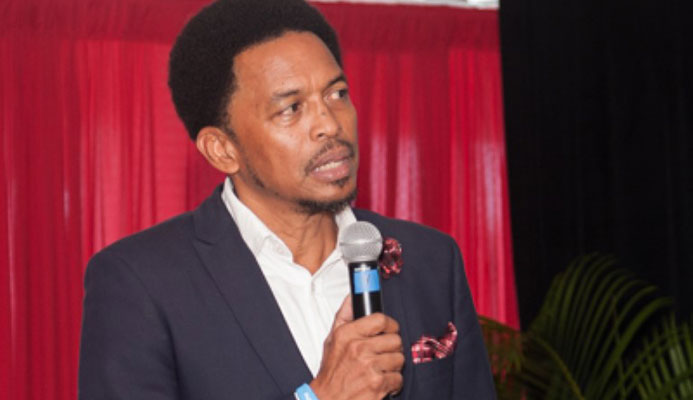
Buenos Aires 2018 is done and dusted T&T Youth Olympic Games team returned home to weather turmoil and flood-related issues.
Finding ways to generate funds
Last Saturday, I engaged in one of my favourite activities - I have many and it's hard to choose one - but no matter how you spin it, the Fatima College Alumni October Food Fest is a must do once various obligations including the demands of the T&T Olympic Committee (TTOC) and T&T Commonwealth Games Association allow me the time and space.
Transforming the Olympic movement
The International Olympic Committee (IOC) President Thomas Bach is determined to transform the IOC and the Olympic movement into a much more transparent and accountable, modern and progressive organisation.
A Republic Day salute to our sporting heroes
Republic Day - Yesterday saw sport hitting the headlines for all the right reasons as a number of sportspersons received national awards. Carrying the flag was Olympian and Olympic medallist Wendell Mottley. The Queens Royal College past pupil is a wonderful example of someone who achieved excellence in the classroom, sports field and as a finance professional.
The power of small
Yesterday, the words, concepts and ideas were coming fast and furious as the presenters on day one of the International Olympic Committee (IOC) and Association of National Olympic Committees (ANOC) Olympic Marketing Seminar got underway at the headquarters of the National Olympic Committee (NOC) of Spain.
Take a fresh approach on sporting goals
The traditional governance structure under which most national governing bodies and Olympic Committees operate aren't standing up to the demands of the contemporary sport.
Use sport as a tool for social change
The T&T Olympic Committee (TTOC) and Commonwealth Games Association of T&T (CGATT) on the occasion of International Youth Day (IYD) called on the T&T Olympic and Commonwealth sport movement to take urgent measures and actions to ensure that sport with in the twin-island Republic is a safe space for children, youth and young people at all levels.
Endless prospects for Invaders Bay
Invaders Bay has awesome potential to rival similar sized projects around the world. Most of which are visionary, breathtaking and jaw-dropping.
Moving towards a brighter tomorrow
Today makes it 24 months to the day to the opening ceremony of the 2020 Summer Olympic Games. Approximately 11,000 athletes will participate in 339 events in 33 sports (50 disciplines). The motto of the games is Discover Tomorrow.|
Tackling abuse in sport
THE CALL by president of the Trinidad and Tobago Olympic Committee Brian Lewis for greater attention to be paid protecting children from abuse during sporting activity is one which all must heed.
Make extra effort to be better
The headline in one of the daily newspapers read “Hit for Six”, another headline in another daily read “TT rugby dreams dashed by RAN (Rugby Americas North)”. Then there are various disputes and accusations and counter-accusations.
T&T to support its athletes
For those who want to achieve sustainable success at the highest level of Olympic sports, T&T is no bed of roses.
Understanding the sports industry
The road ahead is beckoning. High-speed change in the sports industry is creating the environment for those brave enough to plunge in head first and grab the opportunities to adapt the trends into a lucrative and viable sports business.
Ditch negative for positive
Trying to process a lot of things that are happening in T&T can be detrimental to your spirit and soul. It’s simple and convenient to pivot to feeling bewildered.
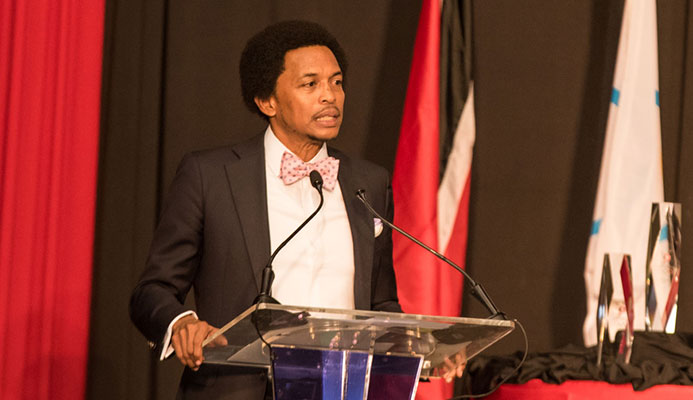
Delving into the business of sport
The tagline for last week’s Leaders’ Sports Business Summit held at Times Centre in New York was “experience the future of sports”.
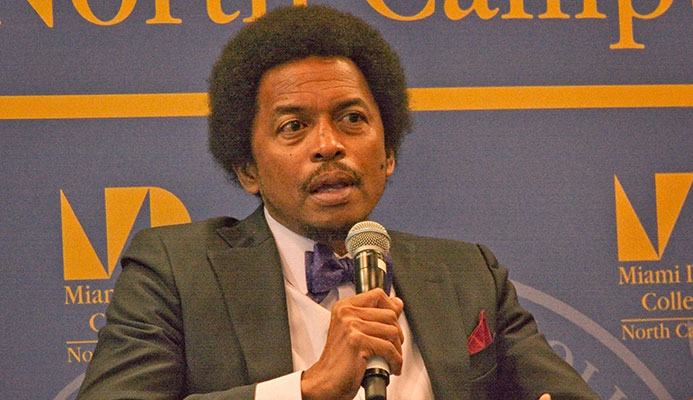
Fighting to keep positives in focus
T&T at times can act and appear as if we're an angry land populated by angry people with only dark and deep thoughts.
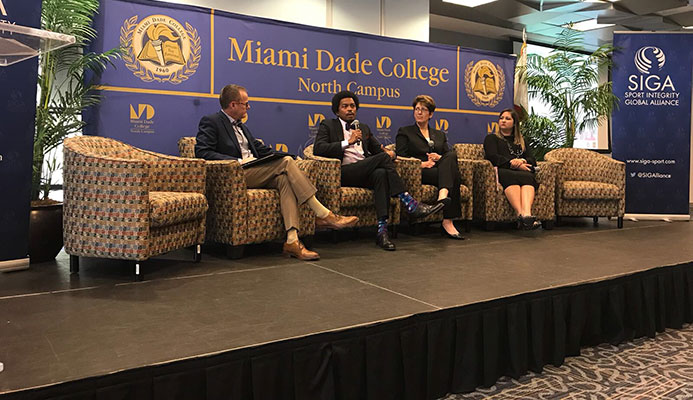
‘Take Child Abuse in Sport Seriously’
Trinidad and Tobago Olympic Committee President Brian Lewis has challenged sporting authorities to take child abuse in sport seriously.
I extend congrats to all of you
Gold Coast Commonwealth Games is over. It is now history.
Let’s talk sports law
If you are passionate about sport, children and youth then you must attend two upcoming events, one tomorrow and the other scheduled for April 12, the Lex Sportiva—Beyond the Game—a sport law workshop to be hosted by the University of the West Indies, Faculty of Law, St Augustine Campus. The main facilitator for the sport law workshop will be Ian Blackshaw, an International Sports Lawyer, Contributing Editor of the International Sports Law Journal.
Welcome President Paula-Mae Weekes
One thing for sure that we can all attest to is the high level of scrutiny and public scrutiny that public office holders have to face when they are elevated. Everyone will have a perspective and a point of view about why both are important. Social media has heightened such scrutiny with the average citizen who now has an avenue to express their opinion. It can be a mind bender.
Sports business is no laughing matter
Who laugh last laugh best. Who want to scoff and laugh go ahead. From where I sit the race is on. Those who allow fear to keep them rooted behind the starting line will not reap the benefits that come with rising above adversity.
Holding the fort in challenging times
At times you have to take a step back and take a breather because somewhere inside of the intensity of the battle there are moments of clarity. Times when you move from a position of where nothing seems to make sense - to understanding that it makes sense after all.
Things That Matter Column Tuesday 6th February
Last week at the Siga Sport Integrity Forum in Rome - there was a lot of candid discussion about sport governance and the importance of governance on the integrity of sport.
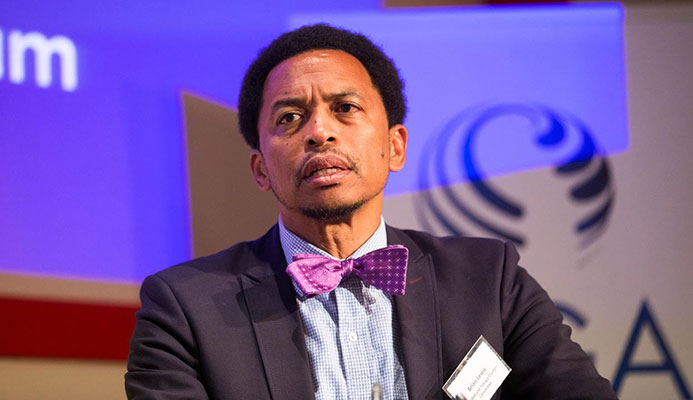
Change, adapt or get out of the way
At times I don’t think people appreciate how tough T&T can be. This is a place where people tear you down simply because you may not be like them.
Bureaucracy holding back T&T sport
Hard questions need to be asked of everyone in the T&T sport system.
In these days of hard economic times, where money is hard to come by—value for money—is the key metric and with bureaucracy sucking up a large percentage of the funding that is available, there is a cause for unease.
Stop making promises that cannot be fulfilled
There are individuals who are manipulative, dishonest and disingenuous and who appear to believe in concepts such as good governance, accountability and equity, but that’s the furthest thing from the truth.
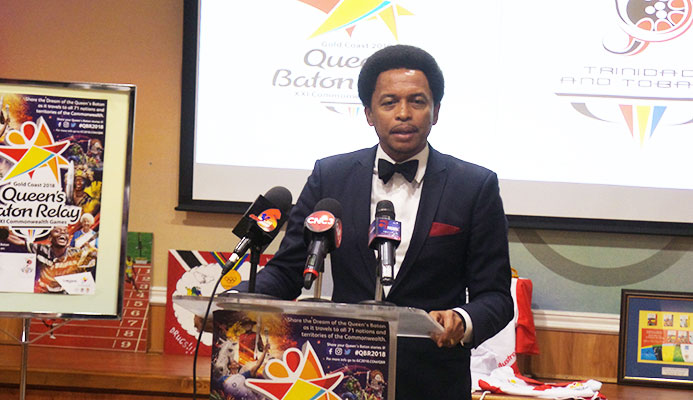
Who cares?
Connecting the dots, given constraints and conflicts, financial constraints count as limited resources. Decision making and goal setting are providing a searching examination of almost everyone holding leadership, policy making, administrative and managerial responsibility. Some find it easier than others.
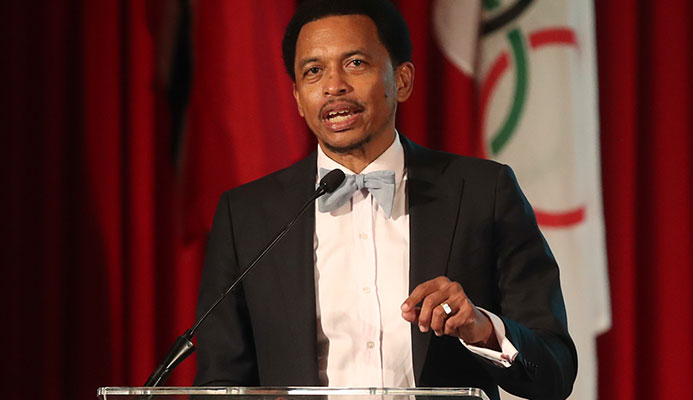
Walk a mile in their shoes
The Beetham Gardens community took centre stage last week as residents blocked the roadway, threw missiles at motorists causing panic along the Beetham Highway.
Who cares?
Connecting the dots, given constraints and conflicts, financial constraints count as limited resources. Decision making and goal setting are providing a searching examination of almost everyone holding leadership, policy making, administrative and managerial responsibility. Some find it easier than others.
‘Holdip in our hearts’
I have tried in the last week to find appropriate words to describe Mrs Dianne Marshall Holdip, the former assistant Registrar at High Wooding Law School, cultural advocate of the calypso, steelband and mas fraternity, devoted mother, wife and best friend, a nation builder and role model.
Another proud sporting moment for T&T
It’s absolutely amazing. On 2nd November 2017 in Prague, Czech Republic in front of a capacity crowd of Olympic movement whos who. The Trinidad and Tobago mens 4x400m Iaaf World relay team were called on stage to receive the Association of National Olympic Committees Award for best male athlete from the Americas region.
Embrace new ideas to shape future
A fresh approach and new opportunities can help sport rediscover its mojo and edge.
Self serving; misplaced selfishness; an orgy of self interest, that’s how many people now define and see the world of sport.
Sport continues to lift country’s spirit
For many people the glass is half empty.. not half filled.
Every day it's story after story of troubled times and overwhelming loss of hope.
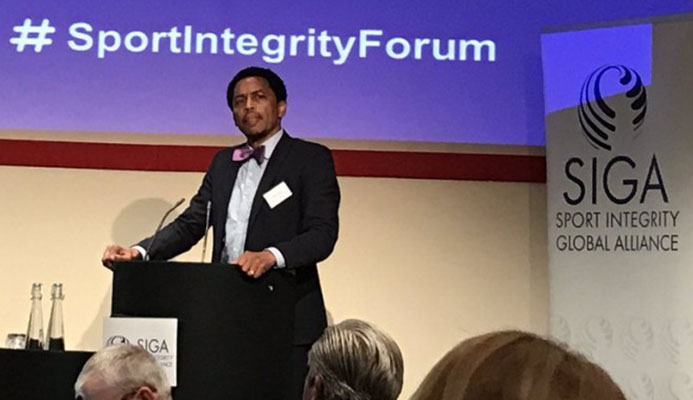
Embrace the benefits of social media
Sporting organisations at the top of the sport hierarchy pyramid are fading towards irrelevance.
Everyone must share burden
Know thyself! How can we move forward if we don’t know and understand ourselves? What do we believe? What do we stand for? How do we see ourselves?L
This culture of entitlement in sport
If Sport stakeholders in Trinidad and Tobago continue living in denial oblivious to the harsh fact of austerity. Sport will grind to a standstill as the consequence of the culture of entitlement and dependency .
Economic downturn hits sports hard
Sport is in for a tough ride as the country’s economic horizon look very, very, challenging. Where do we go from here?
TTOC steps it up for gender equality
Sport is a “Man’s World”. How then do we accelerate gender parity, unmask unconscious biases and cultural stereotypes?
Tackling abuse in sport
THE CALL by president of the Trinidad and Tobago Olympic Committee Brian Lewis for greater attention to be paid protecting children from abuse during sporting activity is one which all must heed.
Sport, crime and the Police Service
Sociology of sports is the study of the relationship between sports and society. It examines how culture and values influence sports, how sports influences culture and values, and the relationship between sports and media, politics, economics, religion, race, gender, youth, etc. It also looks at the relationship between sports and social inequality and social mobility.
Lewis: Child abuse in sport must be addressed
CHILD ABUSE in sport continues to rear its ugly head across the world. No sport seems immune from the scourge with tennis, soccer, athletics and cricket rocked with scandals in the recent past. Victims have become bolder in speaking out even decades after abuse occurred at the hands of coaches and administrators in whose care they were left in. The Penn State football programme in the United States has been found to be complicit in covering up the many reports of sexual abuse by its renowned coach Jerry Sandusky who was later convicted on 45 counts of sex offences. Three Penn State officials were also convicted for failing to alert the authorities about the allegations.
With freedom comes responsibility
Freedom morning come! It’s Emancipation Day. T&T has the acknowledged distinction of leading the way in declaring Emancipation Day a public holiday.
T&T’s young people matter
Last Saturday, I gave support to my daughter Sanian at the Tribe 2018 Carnival band launch - festival of the bands. Sanian, a former national youth tennis player, has an entrepreneurial bent and has launched an ambitious fashion and design business concept called “Sanianitos”.
The Gift of Anger
The screams and tears, the reality of brutal, barbaric and heartless crimes against law abiding and peaceful citizens confront our country. Anger! Anger! Rage! The Gift of Anger!
We need to display kindness
Many of us seem to take tremendous pride and joy in making others feel like losers when their river of disappointment burst its bank.
Time for sports to go high-tech
The T&T Olympic Committee (T&TOC) is focusing a lot of its attention on being digitally networked and prepared. I was reading recently that over 70 per cent of consumers rely on social media when deciding what to buy and in some case where to go. In fact, it’s no secret people made a lot of decisions based on information from various communication platforms.
Keeping our children physically active
Last Saturday, Presentation College, San Fernando, opened its refurbished squash court. There for the cutting of the ribbon and official opening was President Anthony Carmona, Attorney General Faris Al-Rawi and Darryl White, RBC Royal Bank T&T managing director, all past students.
Stop breeding negativity
We have to learn to think. Our two feet deeply rooted in our history, our traditions, our sports, our culture, our food, our art, our music, our challenges and our triumphs with our head facing and geared towards the future. The past recast in the future with a commitment to quality.
Don’t forget the past, learn from it
I couldn’t help during the long Easter weekend but to reflect about the price of progress and sort via the modern reality of google to seek out King Austin’s “Price of Progress” calypso and Richard “Nappy” Myers “Old Time Days” to frame the context of my deliberations and reflection.
Sunday 16th April 2017 : Fight the Gravitational Pull of Negativity.
Easter time is perceived as the resurrectional period for renewal , reflection and new beginnings.
On behalf of the T&T Olympic and Commonwealth Sport Movement and Team TTO we extend best wishes and Happy Easter Greetings to the national community .
Time to tap into human, natural resources
The Association of National Olympic Committees (ANOC) says “positive” discussions have been held with International Federations (IFs) on the inaugural ANOC World Beach Games and it was decided that the event will be pushed back two years, from 2017 to 2019.
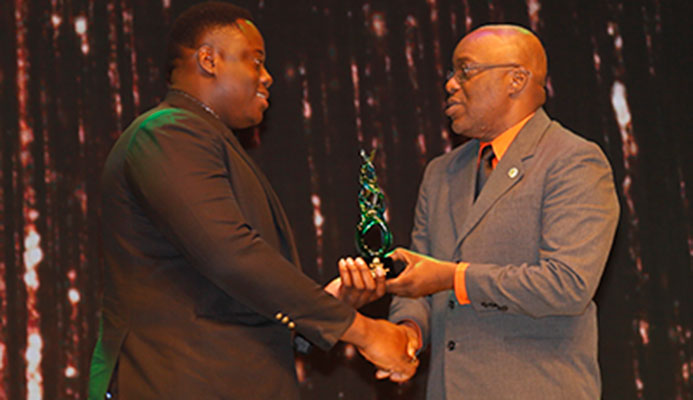
Sport is about hope and inspiration
It is my belief that organisations and leaders have an obligation to be future and forward looking, ambitious and far reaching in their strategic view.
Mayor Martinez: Sports a positive change agent
What is an entrepreneur? What is entrepreneurship? What is an entrepreneurial process?
Time to be decisive and make that social change
“We the people”. It begins and ends with us, the people.
Love you first on this Valentine’s Day
“If we really love ourselves, everything in our life works” — Louise Hay
Let T&T’s sport industry shine
Many Trinbagonians who travel abroad have used Uber and in general have given positive feedback about the experience since Uber was launched, it has garnered headlines around the world.
The Future is Female Seeks To Create A New Reality for T&T Olympic Sport
You have to want it so badly that nothing else matters. To represent your country you have to want it even more. You have to have a strong mind. Olympic and elite level sport is about constant improvement otherwise you will be left behind.
To achieve Gold medal Success :Focus on Solutions - take personal responsibility
Take personal responsibility , focus on solutions rather than on the problems and having a plan, a strategy and priority for your training and performance.

Remove barriers for sport to be more inclusive
Sport at this point in time in its history is in a deep and intense battle to rise up from the fog of tradition and its status quo into the modern world.

Fidel Castro left an envious sports legacy
Events on the sports field have shaped us as a country. In tough times, sport has united us as a country; sport is how we express ourselves as a nation—especially at the Olympic Games, IAAF, and Fifa World Cup nand the World Netball championships which proves that sport matters.

Well done, Valentino, you’ve left your mark
“Forever!” That was my reply when I was asked how long I have known Valentino Singh.
“You not serious.” That was my reaction when told that we are into his last days on the job.
Sorting out complex issues of Olympism
The general assembly of the 21st Association of National Olympic Committees (ANOC) is underway in Doha, Qatar, beginning today. Over 1,200 delegates including representatives from 206 Olympic Committees, International Sport Federations and Olympic bid cities will be in attendance.

Take note of Warner’s timely wake up call
In his keynote address at the IMF High Level Caribbean Forum at the Hyatt Regency, Port-of-Spain, recently, Massy Holdings CEO Gervase Warner expressed the view that the current economic and social circumstances are a blessing in disguise and the wake up call the Caribbean needs at this time.
The next step in TTOC’s plans
It’s the time of year when taking a look back as a way of determining the next step or what changes are required is the order of the day. For the Olympic Committee (TTOC), the Olympic year is a pivotal one. What worked and what didn’t work?
The impact of good governance on sport
“Our lives begin to end the day we become silent about things that matter.”
Martin Luther King, Jr.
Battle of the hearts
As I stood at Sogren Trace Recreation Grounds and looked at the hundreds of children from East Port of Spain and environs interacting in peace, while the hard core onlookers on the surrounding perimeter kept a visible presence, many thoughts and ideas came to my mind on Saturday.
Self preservation vs good sport governance
‘Progress is impossible without change, and those who cannot change their minds cannot change anything.’
This quote by George Bernard Shaw remained top of my mind during various events this past week.
No time to sit on the fence
A changing environment with numerous challenges and opportunities is not the time to sit on the fence nor indulge in hypocrisy and lip service.

Positive vibes for Team TTO’s brand
The Games of the 31st Olympiad opened at the iconic Maracana Stadium in Rio de Janiero on Friday and a packed stadium and billions around the world tuned in to the big show. The moment that captivated Trinidad and Tobago would have been TeamTTO entering into the famed Maracana.

Intense pressure for IOC, athletes
It takes two hands to clap. As we strive to achieve the vision of ten or more gold medals by the year 2024, the major hurdle that we have to overcome is attitudinal. Those who say it can’t be achieved, you are very right. You will never achieve it. It’s as simple as that. If your attitude is we can’t or I can’t, then that’s your reality.
Excitement almost fever pitch as Rio nears
Believe it or not, it’s just about two weeks to go to the Rio Olympic Games. The excitement is reaching fever pitch. Team TTO Tee shirts, Believe Tee Shirts and wristbands are now available at all branches of The Fan Club, MovieTowne, Trincity Mall and Gulf City Mall.

Rio anxiety is taking over
Get ready for the Rio Olympic Games... It’s almost here. The wait will soon be over with

TTOC cutting loose from its comfort zone
The Trinidad and Tobago Olympic Committee’s (TTOC) effort to transform how it markets and brands itself has seen the National Olympic Committee embrace a different approach in areas such as the alignment with Trinidad and Tobago music and culture.
T&T potential and talent—unlimited, Things That Matter
Last Friday, mayor Keron Valentine kicked off the city of Port of Spain’s 102nd anniversary celebrations. Thousands turned out for the Fashion and Mas Rock the City event, the brainchild of designer Anya Ayoung Chee.

No hiding place for Rio Olympics - Things That Matter
The Olympic Games in Rio is the first to be held in South America. Brazil and Rio de Janiero are home to a diverse population. It is claimed that Rio 2016 will be a catalyst for change in Rio leaving a positive legacy not only in sport, but also for society, the economy, urban infrastructure and the environment.

Please attend to obesity now before its to late - Things That Matter
According to a recent report in one of the daily newspapers obesity is crushing this country’s health sector, social services sector, people’s wallet and in general it is a problem that ought to be viewed as a national issue.
A whole new ball game called sport
Its important that the turmoil within sport locally and internationally be seen in a positive light. There are opportunities within the crisis but capitalising on those opportunities will not materialise without the vision to see the possibilities.
Athletes—our priority - Things That Matter
Athletes sacrifice years of their lives striving to compete at the very highest level. They dream of taking part in the Olympic Games and World Championships.

A severe test of nerves - Things That Matter
Due to a hectic schedule and a well documented issue that has generated significant and heated debate, I had little private head space in recent days, so much so it would have been easy to feel a sense of despair.
NSOs agree to ‘good governance’ code in sport
Thirty-one delegates comprising National Sport Organisation (NSOs) members and executive together with council members of the T&T Olympic Committee (TTOC) agreed to a good governance commitment when the TTOC held its Annual General Meeting (AGM) at Olympic House last Saturday.
Making a decision because it is right, Things That Matter
The President, said historian Paul Johnson, is a lonely person in times of crisis. The weight of leadership at times cannot be shared or passed off on anyone else.
Policy makers leave sport in no-man’s land - Things That Matter
What are the barriers to new thinking and innovation and how do they impact on sports’ growth? I believe there has been an absence of self-belief and clear thinking that has left local sport in no-man’s land in respect of policy makers and those who influence policy.
Making T&T a serious player in global sport, Things That Matter
If Brand T&T is to become a world class global sport brand the challenge is to move from talk to action and to do so, not someday but now.
Making T&T a serious player in global sport, Things That Matte
If Brand T&T is to become a world class global sport brand the challenge is to move from talk to action and to do so, not someday but now.

Time to give T&T sport brand industry status
Putting the party islands of Trinidad and Tobago on the global sport map and getting a bigger piece of the global sport industry pie will require a comprehensive sports ecosystem and giving T&T sport - industry status.
Making sense of purpose and priority - Things That Matter
T&T has an abundance of world class talent and potential. If only we believed in ourselves and not spend too much time focusing on what’s wrong. When life happens and things don’t go the way you expect it, it is easy to question yourself.Self doubt sets in and you question yourself and allow others to get into your head with their negativity.
Preparation pace quickens at Olympic House - Things That Matter
Breaking point. Trinidad and Tobago is at a crucial place. People make decisions on the basis of agendas. It is about what is convenient and expedient. It matters not what the truth may be. Once it serves their own agenda, that’s it! Fairness and equity is dependent on interests of those who believe that money and more money makes the world go round and round.
Carnival is T&T’s positive secret weapon
There are those who take issue with Carnival for various reasons. Carnival mentality is seen in some quarters as a negative. Many years ago leader of Singapore, at the time, Lee Quan Yew suggested that Trinidad and Tobago’s carnival mentality is more curse than blessing.
Sport industry—answer to T&T's economic woes? - Things That Matter
Why is the concept of a sport industry in T&T still receiving lipservice only?

Stark messages for law-abiding citizens - Things That Matter
Schoolmates of murdered Success Laventille Secondary students Deneilson Smith and Mark Richards, described as “real madness,” the shooting of both teens shortly after they were pulled out of a PH taxi along Picton Road, Laventille, last Thursday.
Sweet, Sweet Trinidad and Tobago - Things That Matter
Approaching the home stretch of the 34th edition of the T&T International Marathon with the finish line in sight, a group of spectators, who may have been early finishers, started singing calypsonian Lord Funny's ditty: ‘Sweet, Sweet Trinidad, How I love mih country bad.” It was welcoming, patriotic music for the ears of some weary travellers.
Athletes not afraid of going for gold
In the high pressured world of Olympic and elite sport where going for gold matters, ‘almost’ do not count. It’s the ability to remain focused in the midst of the chaos. The line between victory and defeat is razor thin.
Lewis outlines ‘10 golds 24’ vision
Trinidad and Tobago Olympic Committee (TTOC) president Brian Lewis says the ten golds 24 Athlete Welfare and Preparation Fund, from which he will raise awareness by participating in the 2015 Trinidad International Marathon on January 25, will also provide for athletes falling outside the conventional subventions and those who have fallen on hard times.
Rio 2016: Walk a mile for T&T's Olympic Athletes as they strive for 10 or more Olympic Medals by 2024
Its an Olympic year. Ensuring T&T athletes are the best prepared they have ever been is the focus of the Trinidad and Tobago Olympic Committee (TTOC).
Special year for TTOC - Things That Matter
Academics, economists and public policy technocrats and theorists need to be more open-minded and less dismissive regarding sport in T&T and the social and economic benefits and opportunities that can be derived. Ignorance, either deliberate or unintentional, can no longer be an excuse as it is suffocating the possibilities that abound within sport.

Sport will be a saving grace for T&T
Belt tightening, budget cuts, and a call by Prime Minister of Trinidad and Tobago Dr Keith Rowley for national sacrifice as the twin Island Republic's oil and gas based economy deals with dismal fiscal projections as a result of falling oil and gas revenue.
Goodbye to a tough year for sport - Things That Matter
The year 2015 is about to say bye bye. What a tumultuous 12 months it has been. For most sport fans, their memorable moments would surround the FIFA scandal and the IAAF revelations regarding Russia. Both stories stole the thunder from the many outstanding achievements on the field.

Lifetime of effort for moment of glory - Things That Matter
How serious do we take the achievements of our Olympic athletes? Do the people of Trinidad and Tobago appreciate the effort that is required of our Olympians and those who aspire to be a champion?

Tough times require Sport leaders to focus on solutions and good governance
The harsh reality is not all sport organisations are positioned to survive the difficult times.
Scandals, oil busts—Sport’s perfect storm Things That Matter
Getting ready for the Rio Olympic Games from August 5-21 next year, is more complicated than it was during the build up to previous Games. The general loss of confidence, in where T&T may be economical, are playing on the minds of most people actively involved in the Olympic preparation.
Sport can assist economic recovery - Things That Matter
Structural adjustment or recession, whatever the experts choose to call it, the reality is there is not enough money flowing in the system here in T&T. How do we create more cash flow? What can we do?
Local Sport Can Weather Hard Economic Times - Things That Matter
The announcement by Central Bank Governor Jwala Ramarran that the country is in recession and the effects will be felt next year (An Olympic Year) has not surprised the Trinidad and Tobago Olympic Committee (TTOC ).
My Miami myriad of human emotions - Things That Matter
Most people believe that sport administrators live a life sipping champagne, munching on caviar and operating in and out of five-star hotels.

The future has arrived - Things That Matter column
The environment in which national sport organisations and governing bodies operate have evolved far beyond the traditional methods and thinking.

Sport bodies must aspire to effective governing - Things That Matter column
Unelected and unaccountable. When the unelected flex their muscles sport is less democratic. Free and fair elections, it is argued, is the bulwark of democracy in any sphere. Any effort to promote and strengthen democracy in sport governance must be embraced no matter how bothersome.

Big cash incentives for T&T medallists - Things That Matter column
The medal bonus for Rio 2016 Olympics in Brazil will be US$10,000 for an individual gold medal, US$8,000 for silver and US$5,000 for bronze.

Ambition by Jehue—how refreshing - Things That Matter column
Ambition by Jehue. It was with a great measure of pride that I accepted an invitation to be present last Saturday when Jehue Gordon launched his signature cologne at Brian Lara’s house.
Good governance is not a slogan - Things That Matter column
Its worth all the trouble. Time is valuable. We have to spend it wisely and focus on the things that really matter.
Things done with a purpose cannot fail - Things That Matter column
Maximising commercial potential is often easier said than done.
Moving past ‘gimme gimme’ mentality - Things That Matter column
Prime Minister Dr Keith Rowley has appealed to the society at all levels to get rid of the “gimme gimme” mentality and return to the spirit of volunteerism. It’s a most timely message given the economic truth facing T&T. Self sufficiency and ambitious visions to achieve and maintain financial independence must be the goal of our major sport organisations.
Sport cannot be bottled like water - Things That Matter column
The uniqueness of sport and that human beings view sport as a special experience and having a special place in their lives underpin what some say is a love-hate relationship. In the best and worst of times, sport is intangible, experiential and subjective. Bernard Mullin, Stephen Hardy and William Sutton probably said it best— sports are expressions of our humanity that can’t be bottled like water.

Together we can achieve greatness - Things That Matter
In 2013 when the vision of ten or more Olympic gold medals by the year 2024 was announced by the Olympic movement, there were those who felt it was unrealistic. However, in 2014, a sports sentiment survey commissioned by the Olympic Committee (TTOC) found that 76 per cent of the population believes that winning ten Olympic gold medals by 2024 is achievable with proper planning and implementation.

Sport more than leisure and pastime - Things That Matter column
Post Life Sport, what do we need to do to achieve sustainable development of sport, recreation and physical activity? What must we do to make real the aspirations of 10 or more Olympic Gold medals by 2024? How do we promote world class standards in sport? Press re-boot and make structural and systemic changes including mindset and culture?
Sport has vote on September 7 - Things That Matter column
 After arch rivals South Africa had beaten the New Zeaand rugby team for the third straight time in 2009, New Zealand captain Richie McCaw laid an All Black jersey in front of his men at the Heritage Hotel and said: "There have been some great men who spilt blood for this jersey, made sacrifices. The toughness, ruthlessness, power, pace. The want. That's got to come from within, the inner desire if that's what it takes."
The above quote is an apt summary of what representing your country is about. All sportsmen and women can attest to that deep down emotional resonance. National pride. Sport stakeholders have national pride and commitment in abundance. It’s the power of sport. As we head into the final three weeks of general election campaigning, many questions are being asked and platform promises are aplenty.
A question that come to mind is: are the political parties mindful that sport stakeholders have a vote? What will be the future like for sport in T&T? Will the cuts and belt tighten have a devastating impact on sport? What are the respective parties’ policy regarding to sport? Under which party and government will sport be better served?
There are pertinent questions that have to be asked by sport stakeholders. If sport is going to be looked at in the usual way then it is going to be a long hard road. Harbour no illusions of grandeur. If sport is to achieve any semblance of sustainable progress, growth and development it requires a quantum leap forward.
Sport stakeholders have a vote and like all citizens sport stakeholders have a stake in determining what T&T will look like post September 7. A fundamental, foundational and radical change in thinking is needed for sport to thrive in the coming years. The reality of falling oil and gas revenues is not an illusion. Sport stakeholders must value their vote.
These days are not the best of times for harried sport administrators, athletes, coaches and sport clubs, sport fans and supporters and sport club members. Any one with a passion and keen interest in sport in T&T will be failing in their duty, responsibility and obligation if they didnt give serious consideration to the future of sport.
So much is still needed to be done to develop a sporting culture in T&T. With media houses cutting back on the alloted time and space for sport in the election frenzy, it is very clear that sport is low down on the national value chain. Sport has a vote and that vote should not be taken for granted or underestimated.
Sport has the power to make a difference in all areas of national life. If, however, sport stakeholders don’t have respect for their collective power then don’t expect anyone else to take sport seriously. Sport in T&T should not allow itself to be designated as insignificant and unimportant. It has been said that you can’t win or lose a general election on the basis of a lack of a sport policy or because you have one.
That may well be so but we are in changing times. Post September 7, sport will move up the national value chain and be a serious topic on the national agenda. Sport matters. Sport has a vote and sport can and will make a positive difference.
Brian Lewis is the President of the Trinidad and Tobago Olympic Committee. The views expressed are not necessarily those of the Olympic Committee. Support #10 Golds24 Athlete Welfare and Preparation Fund make your donations to any branch of Scotiabank account number 171188
One year to go to Rio - Things That Matter column
 The average person will tell you almost anything can be done. There is an old saying; all big ideas meet with opposition and all big things have been accomplished by men and women who stuck to their big idea. Tomorrow, Rio 2016 will celebrate one year to go to the opening ceremony of the first ever Olympic Games in South America.
The Olympics is about setting big goals. Rio and Brazil had a dream to host an Olympic Games. The South American nation hosted the 2007 Pan Am Games as a test of their capabilities. They would have learned some valuable lessons and used those lessons and experiences to inform their winning bid.
In the face of some well-publicised issues including the awful state of the location for sailing, Rio is in a stepped up mode with one year to go. Their ambition to host a successful Olympic Games is upon them. For national Olympic committees one year to go is also an important milestone since there is an intensity and focus that is elevated. The pressure starts to build.
With the increased focus on Rio 2016, sponsors wake up to the opportunity but in most cases the long-standing partners become very rigorous in ensuring that their rights are activated. One year to go to Rio. The realisation that the big moment is on the horizon. Marketing efforts start to mount.
Rio 2016 one year to go.
Reports suggest that about 500,000 visitors will travel to Rio next year. Airlines will be stretched to the max. Finding accommodation is going to be challenging and with an Olympic premium. The Rio Olympic Organisers have signed Airbnb. In respect of the commercial use of the Olympic properties there are standards, protection of the value of the Olympic properties.
The use of the Olympic properties must be aligned with the Olympic values. Any use of Olympic properties that is perceived to devalue the Olympic Movement, the Olympic Games, and that detract from the Olympic ideals will not be approved. All rights to the Olympic symbol and other Olympic properties belong exclusively to the International Olympic Committee (IOC) and can only be used with the express prior written consent of the IOC.
It is important for the public and corporate T&T to appreciate that the role of partners in promoting the Olympic Movement and the Olympic values must not be underestimated. Olympic partners play a vital role in communicating the Olympic symbol by sponsorship activation not only during the period of the Olympic Games, but 365 days a year.
Everyone associated with the Olympic Games have big ideas and goals. The T&T Olympic Committee and its athletes, coaches, managers and administrators and medical support staff also have high aspirations. One year to go to Rio. One year to go is for some a wake up call, while for others it’s simply another phase in a well structured long term plan.
It is going to be an exciting but challenging 365 days.
Brian Lewis is the president of the T&T Olympic Committee. The views expressed are not necessarily those of the Olympic Committee. Support #10 Golds24 Athlete Welfare and Preparation Fund make your donations to any branch of Scotiabank account number 171188.
Golden era for sport at hand - Things that Matter column
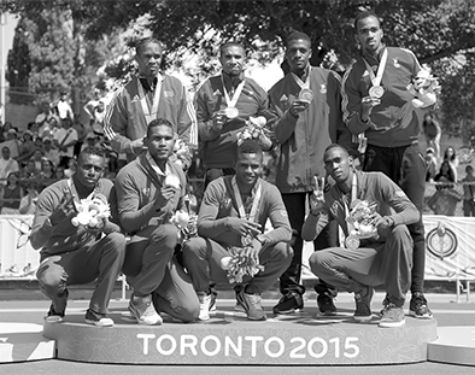 The goal of achieving 10 or more Olympic Gold medals by the year 2024 created debate. There were those who felt, and probably still do, that its unrealistic. They think that making the leap from two Olympic champions to 10 by 2024 is beyond real. Then there are those who understand that achieving that goal must first begin in the mind.
What comes next? Having accepted mentally that achieving 10 golds is possible and is not out of reach, the next step is how are we going to get those 10 or more gold medals. The Olympic Committee has conducted a survey and a follow up is now due. The survey and other research based sources are aimed at providing important data and analysis.
Budgets have to be done. Assessments,monitoring and evaluation. What are the targets and projections? These specific targets must be established within the context of a long term athlete development programme. Harnessing the abundant talent and potential can be done if there is a systematic approach. Winning medals are the end result of a systematic approach be it local or foreign.
When one considers the performances of T&T on the sporting stage in recent weeks. It’s about time that we put our collective energies to work. We can make a name a positive name for T&T on the global sport stage. I accept that based on all the economic experts T&T is facing a daunting economic future. The predictions are that who ever wins the upcoming national election must make some hard decisions.
That being so. There may well be the view that sport is surplus to requirements. It is hoped that this is not going to be the attitude towards sport. Give T&T sport a fighting chance. Double even triple the allocations to sport. But put in effective monitoring and evaluation systems. Get the key stakeholders involved. Let them say what they want.
The funny thing is that even as this column is calling to triple the allocation, we are mindful that certain changes require an attitudinal and mindset change more than a monetary one. It can be done. Lets give it a really good go. With one year to go to Rio Olympics lets put a huge effort behind a podium quest.
Lets aim to exceed the London 2012 medal count. Be not afraid of the challenge. Lets not be intimidated. Lets go for it. There is little margin for error with 365 days to go to Rio 2016. Let me take this opportunity to congratulate this country's Toronto 2015 Pan Am Games team, Soca Warriors and The Red Steel. They all lifted the spirits of a nation buffeted by an intolerable crime situation.
The joy that spreads through the nation because of the positive exploits on the field of sport is there for all to see. Time and time again sport has delivered. What more can sport do to prove its case? T&T, the dawn of a new golden era for sport is at hand. Lets not blow it because of short sightedness.
Brian Lewis is the president of the T&T Olympic Committee. The views expressed are not necessarily those of the Olympic Committee.
Support #10Golds24 Athlete Welfare and Preparation Fund make your donations to any branch of Scotiabank account number 171188.
Sport leaders face challenging times - Things That Matter column
The 21st century environment requires a nimbleness of thought and decision-making on a daily basis that is proving challenging for almost every sport leader. Having to focus daily on growing the sport you lead while working with key stakeholders from all over the globe, while at the same time addressing national needs, is at best interesting and at worst simply overwhelming.
In T&T, a huge challenge is to return sport participation to previous levels and then manage exponential growth strategically in a sustainable way. Making choices that are best for the long term viability of sport becomes the strategic priority. Building the understanding and trust across the various stakeholders is also necessary.
Adding value to stakeholders, who are in essence clients, require balancing the increasing demands inherent in a member based non-profit organisation that also functions in a burgeoning commercial industry. Coming up with strategies for the direction of the NSO, specifically on the business development side is proving a significant step up for every single NSO.
Most sport leaders are facing the hard question: how to balance their love of sport with the business of sport while at the same time facing up to the realities of the political side of sport. There need to be some hard choices made; the resistance to change is powerful and influential. Moving local sport forward is a journey. And like every journey it starts with a single step with obstacles to overcome along the way.
Where is T&T on that journey from developing a strategy to making important decisions and delivering on objectives what is our guide? How do we position sport in T&T for accelerated growth? How do we position T&T as an emerging force in global sport? How can we integrate the diverse objectives and agendas to develop a united strategy?
I remain convinced that T&T provides the near perfect stage to develop and sustain a powerful presence in the theatre that is global sport. T&T is alive with potential. Sport talent and potential is in our DNA. What will it take for policy makers and manifesto drafters in the political realm to wake up to the untapped value of sport?
Modern sport is a diverse business. Setting goals, single minded focus on success, being a team player are all leadership skills that are developed from playing sport. NSOs are responsible for governing their sport, following rules and regulations as established by their international federations and at the same time providing member organisations with increasingly demanding service expectations, often in the face of tremendous financial difficulties.
The person ultimately responsible for the strategic direction and implementation for the NSO, for understanding its strengths and weaknesses, is its president. The president must be able to demonstrate the full range of modern leadership skills commonly found in successful corporate and commercial enterprises.
The ability to serve, inspire, motivate, empower, guide and attract the best people. The NSOs brand, image, reputation and commercial value can either be enhanced or diminished by the leader. However, notwithstanding all that has been said previously, the most important people in any sport organisation are the athletes not the sport leaders.
Next week we will take a look at the national sport policy which should be the document that provides the guide and systemic framework for all local sport stakeholders including the Ministry of Sport and Sport Company T&T. Brian Lewis is the president of the T&T Olympic Committee. The views expressed are not necessarily those of the Olympic Committee.
•Support #10Golds24 Athlete Welfare and Preparation Fund. Make your donation at any branch of Scotiabank TTOC Account #171188. Share the Olympic Dream.
NLCB, TTOC a golden sporting mix - Things that Matter column
 The National Lotteries Control Board (NLCB) has formalised its partnership with the Trinidad and Tobago Olympic Committee (TTOC ). The historic agreement resulted in the creation by the NLCB of a new instant money (Scratch ) game called Going For Gold that will carry the #10golds24 logo. The projected contribution is $200,000 with potential to generate one million dollars or more per annum.
The upper end is an ambitious target that will require the Going for Gold game to be extremely popular and well supported by the public. It’s a start compared to what is received from national lottery funding in other countries. Aside from the cash injection into the Ten or more Olympic Gold medals by the year 2024 Athlete Welfare and Preparation fund, there are a number of other athlete focused elements such as internship, ongoing training etc.
But the real win for the TTOC and NLCB is the creation of a new paradigm in respect of thinking outside the box. The willingness to come up with new answers to old questions is a credit to the decision makers at NLCB. Senior executives at NLCB were focused on creative solutions so as to support the TTOC to meet challenges and optimise opportunties.
How can we get sport in T&T to flourish? One of the key priorities is to take the guess work out of how sport is funded. What are our most important financial goals? Is our financial resources the determining factor in how we are able to plan and acheive set targets? There are pros and cons to everything.
Some of our athletes are extremely motivated to work hard to acheive their Olympic dreams and goals. Their motivation is evident. NLCB is a wonderful example of a corporate/state entity committed to finding a way to help and support the Olympic Dream. Our athletes are dedicated. They have national pride and are fiercely competitive. To build a successful career in elite sport requires those three attributes among others in abundance.
Our athletes matter. They have an unbridled excitement and enthusiasm and determination to give their all for their country. They have stories that everyone should hear. Since 1997, when national lottery funding was introduced to directly help British Olympic and Paralympic sport, Team GB has become one of the leading Olympic nations in the world.
Their legendary Olympic great Sir Chris Hoy has said without dedicated national lottery funding he would not have achieved his Olympic dreams. The British approach to national lottery funding for Olympic sport is now being adopted by a number of other countries.
So while the NLCB Going for Gold Instant Money Game rolled out to the public on Monday is new, it is not unprecedented around the world. It is a first and historic step to advance the discussion for T&T to follow the British approach to national lottery funding for Olympic sport. UK national lottery funding is supporting the stories of courage and resilience of British athletes who aspire to win Olympic medals and become Olympic Champions.
I believe a similar, dedicated and specific national lottery funding approach that is transparent and accountable will have a huge and transformative impact on Olympic sport here. To acheive the target of ten or more Olympic gold medals, the first challenge is for the NLCB and TTOC to ensure that the Going for Gold Instant Money Game is a success.
Brian Lewis is the President of the T&T Olympic Committee. The views expressed are not necessarily those of the Olympic Committee. Support #10 Golds24 Athlete Welfare and Preparation Fund make your donations to any branch of Scotiabank account number 171188.
Sport not a bully pulpit - Things That Matter column
 The dictionary defines excellence as the quality of being outstanding or extremely good. The International Olympic Committee promotes respect, friendship and excellence as core values of the Olympic Movement. Propagating these values is the responsibility of the Olympic movement led by the respective National Olympic Committees.
It’s a difficult role and responsibility given the ever changing landscape that is contemporary society. Pierre Coubertin- founder of the modern Olympic movement articulated the following:
• Joy of effort in sport and physical activity;
• Fair play;
• Respect for others
• Pursuit of excellence;
• Balance between body, will and mind.
However for the majority of people including many National Olympic Committees it is an Olympic medal preferably gold that defines excellence. What exactly is the pursuit of excellence? For some excellence is not just about winning. Sport inspires people in all walks of life to strive for excellence. There are no shortcuts to excellence.
Supporting the elite aspirations of those who aspire to win medals is a topic that causes significant discussions. Not everyone is of the view that elite level athletes should be supported. It may rankle some especially those of us who see the power of sport making a difference on a daily basis. But it is important to listen to the argument made by those who don’t support sport.
It’s a complicated issue that is shaped by individual experience, upbringing and perceptions. That sport is given special consideration is a source of resentment in some circles. Those of us who argue vehemently and passionately that the development of physical skills and positive motivation that comes from success in team and individual competition inspire the desire to pursue excellence must accept that not everyone buys the party line.
Sport at its best can help young people develop positive mental, social and psychological skills. But it has to be acknowledged that when sport is used for negative reasons it paints an ugly picture. It is in this respect that national sport organisations must be very conscious of the need to maintain the positive image and attributes of sport.
In embracing the duality of our human experience we find the ability to reach deep within ourselves and produce what we choose to define as excellence. In helping young athletes to pursue excellence we emphasize hope. Encourage positivity, set expectations and demand accountability. If we are to inspire champions it can’t be at the expense of the totality of human experience.
Excellence in many ways defines the experience of sport and the Olympic Movement. Aspiring for excellence in all that you do on and off the field is a worthy endeavour. Let’s continue to strive for excellence in life through sport. But let’s also embrace the challenge that sport isn’t a cure all and that making the argument for sport requires giving careful thought and consideration to different views.
Sport ought not to be used as a bully pulpit.
• Brian Lewis is the president of the Trinidad and Tobago Olympic Committee. The views expressed are not necessarily those of the Olympic Committee.
Fix your house or all fall down for sport - Things that Matter column
 Today the Trinidad and Tobago Olympic Committee (TTOC) joins the rest of the global Olympic Movement in celebrating Olympic day. The occasion will be marked by a number of activities at Olympic House, 121 Abercromby Street, Port-of-Spain. Various schools will be hosted at Olympic House. Members of the public are invited to visit and join in the celebrations. Olympic day in T&T comes against the backdrop of troubling times for local sport.
Sport is at a critical juncture and transition, decisions can either harm or help the sustainable development of sport here. Decisions that impact directly on the national sport organisations and their capacity to develop and run their sport require transparent two way discussions. Any perception of a lack of transparent discussions in and of itself damage claims of a commitment to good governance.
In some quarters, the argument is still potent that both the Ministry of Sport and the Sport Company has not done enough to calm fears and allay concerns in respect of good governance. Post Life Sport, the local sport community remains troubled. International bodies are intolerant of government interference.
As the focus was put on a few individuals who may well have had less to do with the entire Life Sport debacle than the public has been led to believe. For certain individuals it’s business as usual and it serves a purpose to perpetually sing the song that national sport organisations don’t know what they are doing. Hence the refrain that Ministry of Sport and Sport Company is the solution.
Take away the fear of a loss of funding or access to funding there is need for broad discussions in respect of the sport system. Somethings aren’t as above board as some purport. Why is the Sport Commission and the establishment of the Commission on the back burner? What are the policy perspectives and imperatives informing the sidelining of the sport Commission? Who decided and why?
Has there been open and transparent consultation in respect of the way forward? What is the vision and strategic imperatives driving decision making? As the Ministry of Sport and Sport Company hold the microscope on national organisations and the Olympic Committee, there is a saying fix your own house first.
There are a number of extremely capable and honest individuals who make a hugely positive difference inside the Ministry of Sport and Sport Company. They have a clear sense of what needs to be done and why respecting the national sport organisations is a critical success factor. They know the hidden truth and need to be given a fair hearing. Ministers of Sport, generally, aren’t the intractable problem. Short term thinking overides the policy cycle.
In countries perceived as best practice, the public sector functions effectively and efficiently on the basis of policy and a policy cycle. What the sport community wants to understand from the political parties contesting the upcoming general elections is a loud and clear perspective on how will sport be integrated as a key pillar in their respective economic and national vision and development plans.
Resource allocation of$57 million dollars to national sport organisations is not adequate and reflective of a sustainable approach to sport development.
Brian Lewis is the president of the T&TOlympic Committee. The views expressed are not necessarily those of the Olympic Committee. Support #10 Golds24 Athlete Welfare and Preparation Fund make your donations to any branch of Scotiabank account number #171188. Share and support the Olympic Dream.
The Buck Stops with NSOs - Things that Matter column
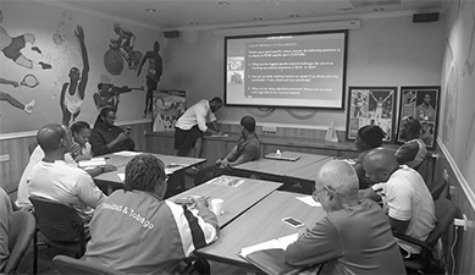 It’s not who wins or loses an election but how those in power govern. National Sport Organisations (NSOs) are responsible for the governance, development, administration of their sport and all else that goes with those mandates. This includes advocating for sport as a key pillar for the economic and social development of T&T.
Politicians and decision makers seem conflicted about giving sport a seat at the table. I believe that the public supports the idea of a key role for sport in the national, economic and social development of T&T. Economic factors underpin the problems facing sport, however, it is important to change the conversation in T&T about sport and move away from the superficial attitude and approach.
The Ministry of Sport and the Sport Company, guided by Government’s policy on sport will facilitate and provide tax payer’s funds subject to the availability of funds from Ministry of Finance. NSOs that allow their autonomy and authority for their sport to be compromised on the basis that they get Ministry of Sport or the Sport Company funding as a convenient excuse must not be allowed to get away with this deception.
The buck stops with the NSOs, not the Ministry of Sport or the Sport Company. The ongoing reality of elite level athletes both individual and team sports having to participate in international competition and Olympic Qualifiers woefully underprepared and under resourced is manifestly unfair on our individual athletes and national teams.
It is the standard to roll out aggregate financial figures to justify that financial support has been given. But that is just half the story. The grassroot reality of sport for those who have no political or other agenda is that sport in T&T has always been a battle; and don’t imagine the struggle will ever get any easier.
Unless political parties are prepared to commit from a policy perspective to make sport a key pillar in their forward vision for the country, the sustainable development of sport and aspirations to achieve ten or more gold medals by the year 2024 will continue to be a struggle.
International headlines for the wrong reasons and the negative impact on the country’s image. Problems and trouble never go away by denial. The uncomfortable truth is a stark fact of life. It takes real courage to search for the truth and to face the consequences.
We continue to send our national athletes and national teams to important international and Continental events including Olympic qualifiers, underprepared. Those who hide behind their desks, papers and pens and ineffective and shortsighted policies and processes, can continue to do so but it’s the athletes and national teams that face the embarrassment and humiliation.
Appreciate and understand the damage to brand T&T and the importance of protecting our country’s brand. We can’t let others with vested interest define our brand. We have to define it ourselves. Sport helps T&T market itself internationally. Transformation of the sport system is a strategic priority. Sport leaders are elected by sport stakeholders. The ultimate responsibility for their sport is the mandate of the NSOs.
NSOs including the T&T Olympic Committee must do what they were elected to do, which is lead not hide behind the Ministry of Sport and the Sport Company.
Support #10 Golds24 Athlete Welfare and Preparation Fund. Make your donations to any branch of Scotiabank account number 171188. Share the Olympic Dream.
Brian Lewis is the president of the T&T Olympic Committee. The views expressed are not necessarily those of the Olympic Committee.
Working together necessary for success - Things that Matter column
 It takes mental strength and a winner's mindset to be the best in the world. If we want to be the best, we have to be willing to do whatever it takes effectively and ethically. Stuart Lancaster, national rugby head coach, has vowed that his squad will be fitter and leaner than ever for the Rugby World Cup in September, warning his players that they face a “grim” time during their training camp at altitude in Denver, Colorado, in July.
“In order to win the World Cup, you have to be the fittest team,” said Lancaster. “And the type of game we want to play, it is probably the most important thing that we need to get right. It is going to be pretty grim for the players in Denver. It is tough there. We are then going to Vail, which is even higher.”
Shad Forsythe, a new fitness coach at Arsenal—headhunted to invigorate their training regime—was one of four specialists who worked with Germany’s FIFA World Cup winning coach Joachim Low’s every session of the way at the World Cup. Arsène Wenger identified the need for improvement in the club’s training regimes and went about solving the problem by recruiting a man who has been working at the vanguard of elite performance.
The two cases above are highlighted in an effort to emphasise how important a proper fitness regime is to the creation of a high performance culture. The mantra is a simple one: if you want to be at your absolute best you have to prepare to be the best. In the absence of specific and detailed proper preparation, all else is wishful thinking.
Creating a high performance culture begins with having the mind-set and mental strength. Without the mind-set and mental strength one would hardly be able to attain the best performance that is required to achieve success at the highest level of world sport. Some have asked why is it so difficult to move the T&T sport environment and system to a high performance one.
That there are a cadre of individuals who understand and have the training needed to help build the high performance culture there can be no doubt. But the question is why is it –at least in the minds of the athletes- so hard to get the environment right? We can set all the loft goals and objectives we want. Unless we adopt a high performance mind-set and develop the requisite mental strength to insist that it is in place- the chances of reaching set goals will be difficult.
It makes little sense being defensive or living in denial. It is important that all who have an interest in seeing T&T adopt a high performance culture make the conscious decision to put aside perceived differences and integrate the available resources. It can be frustrating and at times easy to simply stay in our individual silos.
But we are too small a nation to be so inclined. Working together for the common good is a necessary priority. There is too much potential and talent residing in T&T to allow differences to divide and disperse the development of a high performance culture. I saw this list on the Forbes.com website. It makes for interesting reading and is worthy of consideration.
The 18 things mentally tough people do:
1. They move on
2. They keep control
3. They embrace change
4. They stay happy
5. They are kind
6. They are willing to take calculated risks
7. They invest their energy in the present
8. They accept full responsibility for their past behaviour
9. They celebrate other people’s success
10. They are willing to fail
11. They enjoy their time alone
12. They are prepared to work and succeed on their own merits
13. They have staying power
14. They evaluate their core beliefs
15. They expend their energy wisely
16. They think productively
17. They tolerate discomfort
18. They reflect on their progress
Pressure part of leadership - Things that Matter column
Ten or more Olympic gold medals by the year 2024. Establishing T&T as a sport tourism haven. How do we achieve those two objectives for T&T sport? Ask. How to get what you want: Ask. It doesn’t mean whine or beg or complain or plead or grovel. It doesn’t mean expecting a handout or a free lunch or charity. It doesn’t mean avoiding responsibility or doing the hard work.
Don’t just ask and expect someone to give you something. It’s about creating value—value isn’t always tangible. But tangible or intangible it’s about creating value. If you aren’t convinced about what you are asking for, how can anyone else be? Ask with absolute conviction. Be able to show that you are sure of what you want, you are sure you will succeed.
And you are sure you will create value. You have to keep asking. Keep trying and keep changing. What would happen if we ask effectively? We will achieve our objectives. Sport in T&T, no matter all the perceived negativity, continues to deliver at various levels. In the Caribbean, T&T has claimed titles in various sports.
While the argument is that all the success is happening in spite of rather than because of the sport system, those who know the truth will argue that to state that it’s happening in spite of, is a lazy over simplification. The questions continue to come fast and furious. How can we move local sport to the higher level? What specifically do we mean when we say we want to take sport to the higher level?
Is it more gold medals? Is it growth in participation? Is it an increase in the number of women and girls participating in sport? What do we mean? To arrive at answers what we need to do is ask. It may seem obvious but it’s not. Most of the conversations taking place are driven by assumptions. There is a lot of talking at sport taking place and not much listening.
As simple as it may seem we need more asking to take place. One of the dangers we all face is that we become so engrossed in what’s happening that we run the risk of missing subtle changes that are occurring daily. Effective leaders make it a habit to look at their businesses or organisations with a clean sheet of paper-seeking advice and other perspectives from people who are less emotionally invested in their business or organisation.
Pressure is part of leadership. Change creates urgent situations and problems. Most things seem to happen at an inopportune time. We all make mistakes. Leaders are watched closely. Every move. Every word. Every action by a leader is under the microscope. When the pressure is on, the microscope is intensified.
People learn more about their leaders when the pressure is on. When the pressure is on, the question is do you stand up for what you believe? Pressure reveals the true mettle of a leader. Asking questions and seeking answers will provide leaders with the opportunity to anticipate the issues and problems.
No matter what the objective may be—increasing revenue, athlete and coach development, fundraising, problem solving, planning. Whatever it is, asking questions is a fool proof strategy. Sport organisations need its leaders to ask questions and to be unafraid of the answers no matter how unflattering those answers may be.
Transformation is the objective. We must all work and collaborate to drive the transformation of local sport. Transformation and innovation.
Preparing the modern sports administrator - Things that Matter column
 The Trinidad and Tobago Olympic Committee (TTOC) focus on capacity support for member national sport organisations (NSOs) is bearing fruit and the turning point is underway. Those who believe that sport administration is facing serious problems need not be alarmed. Based on the participants signing up for the TTOC sport administration courses there is significant interest in learning about what it takes to be a forward thinking modern sport administrator.
The participants attending the course are determined to make a positive difference as they share experiences and discussions about the betterment of sport. No matter the problems they have an enthusiasm and passion that augurs well for the future. This is not to say that frustration may not set in. But there is a positivity and willingness to confront the issues and wrestle with the solutions that is admirable. They are fearless, inspired and motivated.
The intention of the TTOC in hosting annually a number of courses and workshops is a singular one—to help build capacity, knowledge and skill. Enhancing the ability of those who have a keen interest in sport administration is an important priority. Encouraging participants to take the initiative. To unlock their sport leadership potential so as to transform T&T sport is well worth the effort.
Recent participants include a number of past and current national level athletes who have signed up for the courses and workshops and have stuck it out to the end. Unearthing a new breed of sport administrators who are imaginative and bright these disruptors aren’t contented to complain and do nothing. They are willing to get up and get, hardworking, committed and willing.
They are honest in facing up to the major issues facing T&T sport—the economy and other matters of public concern. That there are structural and systemic social and economic problems facing sport isn’t overwhelming and intimidating the new breed of course participants. They are prepared to challenge the status quo and those who are ineffective in representing the position of sport and the athletes.
The modernisation of T&T sport is an ongoing process. It is important that the TTOC through Olympic Solidarity programmes and funding continue to strengthen national sport organisations management and governance structures. Through the tools provided by Olympic Solidarity the TTOC has been able to continue to develop sport administration training courses.
Moving past the sport administrators’ course is the advanced sports management course which is based on student participation, practical implementation of the material studied through case studies, sharing of experiences and the development of a learning community. The aim of the advanced course is to give a new perspective on sports organisations.
The case study approach is aimed at placing the participants in reality based situations while thinking about future solutions. The sports administrators course provides basic training over a short period. The advanced sports management course is comprised of several modules and an emphasis on acquisition of the skills necessary for sports management.
Sport in T&T will repeat the benefit. The real challenge is for the older heads and thought leaders to not feel threatened by the new ideas and fresh thinking. The TTOC courses and workshops are an incubator of creativity and innovation. The dawn of a new era of T&T sport managers and administrators is here and not a moment too soon. Let’s do it. Embrace and empower change.
Rugby sends powerful message despite struggles - Things That Matter column
 For many of the athletes on national teams not considered major sports the struggle is real. That is not to say that those in major sports don’t struggle or face at times seemingly insurmountable odds.
On Saturday at the St Mary’s College Grounds the T&T national senior men’s 15 a side rugby team defeated Mexico to lift the North America and Caribbean Rugby Association (NACRA) 2015 rugby championship. Previous winners in 2001 and 2008, the Calypso Warriors T&T rugby team has broken into the top 50 ranking in world rugby as a result of their recent exploits.
Rugby is considered a minor sport here in T&T. It’s not a status that should alarm anyone as it reflects the reality of rugby’s participation level as compared to football, cricket and track and field to name a few. Among the few hundred supporters — a decent crowd by local rugby standards — was present to see T&T Captain Adam Frederick lift the NACRA Championship trophy was His Excellency Anthony Aquinas Carmona, President of the Republic of Trinidad and Tobago.
The T&T team dedicated their win to former national rugby player Jason Clark who suffered a significant spinal cord injury a few years ago. Clark still remains a well-loved member of the T&T rugby fraternity and no doubt his comrades still consider him very much a part of the T&T team set up. Cleopatra Borel and Shanntol Ince were also present in a show of patriotism and support for their fellow national colleagues.
As pointed out earlier, the support of His Excellency, Cleopatra and Shanntol would have sent a powerful message of comradeship. At times our athletes struggle to comprehend the “whys” and “wherefores” of the challenges and struggles they face. For our athletes they find it hard to accept that the pride they share in wearing the red, white and black at times is not noticed or considered.
In trying to solve some of the momentous problems facing this small society of 1.3 million people the at times enormity of the problems can seem a mountain too high. But yet in the face of so many talented sons and daughters of the soil. The inspiration to soldier on can be found.
That’s why supporting our national athletes and teams are always an important exercise in patriotism and nation building. Every day those involved in sport strive to make this country a better place using the values of sport. While the support can’t always be financial the mere fact of wearing red and showing up gives our athletes uplift.
Time to stop playing with sport | Things That Matter column
One of the positives of the Olympic Committee’s (TTOC) education and affiliate member capacity building strategy is the increasing awareness within the local movement that much more can be done in respect of improving the management, governance and administration of sport. Within recent years the demand to attend the sport administration courses has increased exponentially.
Last year, the TTOC held its first advance sport management course. This year the course has been oversubscribed. The TTOC also offers mediation and arbitration support if and when requested. A consequence of the increased demand for the TTOC courses is growing requests for the TTOC to conduct sport specific sport management, governance and advisory services.
The TTOC over the years has always been seen as a major stakeholder in the local sport system. It is therefore not farfetched for the TTOC to be seen as an invaluable resource that can be called on to address problems and issues. Given its access to both local and foreign expertise in a number of functional areas it may very well be time for the TTOC to prioritise the use of its global network to support the increased demands for TTOC assistance.
The need for information, insight and analysis for the local sport sector is an urgent priority. The real world isn’t waiting. Change is occurring daily. For national sport organisations and governing bodies to keep up, a quantum leap forward is required—not forward into the future—but forward into today’s world.
We have an absolutely wonderful story to tell the world through sport. But because so many of us are being held back by outdated methods and thinking the true reality of the enormous potential and opportunities can’t be realised. It’s not and never was a guessing game. In the past we may have been able to get away but now given the ready access to information its hard if not near impossible to fool some of the people some of the time far less all the people all of the time.
There are significant opportunities waiting to be explored. This is not the time for hesitancy. We have to go for it. We have to seek out the information, knowledge and the intelligence, make informed choices, ask the right questions and create the right answers. It’s in this context that the TTOC must leverage its access to international resources and institutions to bring a positive contribution to the management, marketing and governance in T&T.
The issues and topics that are high on the global sports agenda must be addressed not after the fact but in advance. We shouldn’t wait until situations become far advanced to address them. In setting new standards we must champion and be in the vanguard of change. The goal should be to transform local sport through innovation and excellence in every area, be it sports marketing, digital media, brand development, event management and sponsorship.
It’s high time we stop playing at sport and get serious about the opportunities within sport. Implementing strategic shifts will require identifying those who will lose the most from the strategic shift as those individuals or groupings will make every effort to derail openly or silently any effort at making a strategic shift and progress.
It is never easy to execute a strategic shift, and doing it with limited resources is even more difficult. A critical strategic success factor is addressing the obstacles and hurdles.
Separating winners from the losers - Things That Matter Column
It’s important to constantly be seeking different ways of doing things. The imperative to have a strategic focus on what the alternatives are and clarifying what the focus is, helps establish the strategy. One can learn a great deal by asking and answering the questions Who? What? When? Where? Why? and How? The answers will usually foster overall insight that can inform the development of a strategy.
In the ongoing drive to seek a systematic approach to achieve and sustain high-performance sport, understanding the roots of high performance is more important than anything else. What constantly separates winners from losers is their approach to strategy. Strategy involves opportunity and risks.
Sport organisations all over the world are battling with their strategic agendas. Sport leaders are wrestling with how to drive forward their respective organisations and overcome the organisational and environmental hurdles that block sustainable progress. There are operational risks, management risk, and sustainability risk. There are strategic contradictions and inconsistencies that require attention. Conventional wisdom acts as a hindrance and creates accepted boundaries.
Sport is no longer just sport. As long as we remain reluctant to accept the need for change we will continue to do the same thing over and over while expecting different results. Many decision makers have a vested interest in the status quo. Change must be introduced if sport is to move forward. Challenging the status quo is a critical success factor. Sport isn’t just the decision makers or leaders- it involves a genuine partnership from captain to cook.
Recently the idea of a structured elite athlete housing programme was articulated. There have been many questions and views about the need or not for such a programme. Outlined below is the basic proposition. A proposal has been submitted to the powers that be. At a minimum one can reasonably expect an acknowledgement and the opportunity to further discuss. Time will tell but in any event for better or for worse, nothing ventured nothing gained.
The purpose of the elite athlete housing assistance proposal is to advocate a policy that rewards Trinidad and Tobago’s National Athletes for their long and meritorious national duty and service at Olympics, Para-Olympics and World Level Championships (Continental & Regional). The idea of Housing Assistance for National athletes is based on the reality that athletes who dedicate years of their life to representing their country at Olympic and World level sport make tremendous sacrifices in respect of their careers, families, and income.
The athlete’s choice to dedicate themselves to National duty and service through sport ostensibly places athletes at a significant social and economic disadvantage.
Under the ten or more Olympic Gold medals by the year 2024 vision, Athlete Welfare and Preparation Fund, the Olympic Committee (TTOC) proposes the implementation of an athlete Housing Assistance Programme which will facilitate expedited housing distribution to athletes. Athletes will be required to meet the Housing Development Corporation (HDC) mortgage criteria and will have to honour their mortgage obligations
Athletes who have served the country with distinction for five or more years it is proposed they receive consideration for expedited housing assistance. Some athletes struggle to adjust to real life when their sporting career ends. Athletes dedicate years of training and sacrifice to fulfill their Olympic dream and to stimulate pride amongst the citizenry of Trinidad and Tobago (T&T).
Providing housing assistance allows for a successful transition from elite and Olympic sport into the real world. The programme will remove the burden of providing a home for their family and ensure a sense of security when their careers have ended.
Brian Lewis is the president of the T&T Olympic Committee. The views expressed are not necessarily those of the Olympic committee.
Grass is not greener elsewhere - Things that Matter
 Just about one month ago I embarked upon and successfully completed the 26.2 mile journey that constituted the Trinidad and Tobago International Marathon from Freeport to Port of Spain.
The marathon walk had no other motive than to raise awareness, attention and funding for the 10 or more Olympic Gold medals by the year 2024 athlete welfare and preparation.
I accept that there are individuals inside and outside sport who don’t share the view that the concern I am trying to highlight has merit or substance. For reasons best known to themselves they refuse to acknowledge, admit or accept that there is need to provide more meaningful financial support to the young talented and dedicated sons and daughters of our soil.
The marathon walk enjoyed its moment in the sun but like everything else the major risk is that the objectives and goals will be subsumed by the nine day wonder syndrome.
It’s a syndrome that saps the spirit as well-intentioned efforts become an exercise in futility—quickly sinking into an ocean of insincerity and hypocrisy ending up on the sea bed of frustration, meaninglessness and cynicism.
If I have to walk a marathon every single day I will however remain dedicated to the cause of our talented sons and daughters who aspire to become Olympic champions.
This is a time for choosing if we want to be a part of creating a great society.
As we go about our daily lives there is a need for us to give a full day’s work for a day’s pay.
It applies not only to those earning a salary in the private and public sector. It doesn’t matter if you are a volunteer sport administrator, an athlete or a coach. Its more than just a monetary value — it’s about the effort you give and the purpose with which you live your life.
When we give a full day’s work for a day’s pay we remain eternally vigilant and pay forward to the next generation and the generation to come. We see ourselves as custodians and stewards of the totality of the space called La Trinity—Trinidad and Tobago.
When we give a full day’s work for a full day’s work for a day’s pay we honour the notion of national pride and civic duty that builds a nation.
Great leaders such as Jesus Christ, Martin Luther King Jr, Nelson Mandela, Mahatma Gandhi have shown that a nation is first founded on the stories that it tells — and silences — to justify its existence.
Their messages and example have taught organisation and the importance of attacking the issues of the day and era. They didn’t talk around issues; they attacked them head on in the battleground of social awareness.
Those of us born and bred in the space called T&T carry in our bosoms a duty to not allow our secret frustrations to keep us from being a champion of hope to the young people of this nation. You can’t think negative thoughts and live a positive life. We can all do something of significance and life a live of purpose. The grass isn’t greener somewhere else. We have to say to the youth and young people of this nation don’t quit on yourself, your job, your life, your dream or your country. Don’t throw in the towel and walk away. Don’t just go through the motions.
Brian Lewis is the President of the T&T Olympic Committee. The views expressed are not necessarily those of the National Olympic Committee.
Support #10golds24 Athlete welfare and preparation fund. Make your donations to any branch of Scotia Bank Acc# 171188
Let’s integrate sport and Carnival - Things that Matter Column
 Sport, carnival and our Carnival mentality combined together, is a powerful force for good and may well be the key to T&T becoming a great Olympic Sport nation and the basis for a sustainable sport industry.
Nobody does carnival like we do. It can’t be explained, you have to experience the outer body bliss that is T&T carnival.
Instead of celebrating our carnival mentality, we celebrate corruption, skulduggery, mediocrity, impropriety, slipshod performance, a poor work ethic, ineptitude and incompetence.
The inherent creativity, inventiveness, work ethic, integrity, sincerity, determination and innovativeness in our carnival DNA is our strength and comparative advantage.
What allows the rank and file of our society to express and vent their frustrations, anger, and despair better than our carnival? We laugh at ourselves and get loose.
Carnival, sport, art, culture, and our music are who we are as a people and as a nation.
Yet we allow self serving tribal instincts to stand in the way of our affirmation and embrace of our Trinbagonianness.
The other point I want to touch on today is good governance.
The T&T Olympic Committee (TTOC) as the authority, voice and representative body of Olympic and Commonwealth sport has a duty, obligation and responsibility to stand up and champion the cause of sport and good sport governance without fear or favour regardless of which political party is in government.
Last week I met with Minister of Sport, Senator the Honourable Brent Sancho and Permanent Secretary in the Ministry of Sport, Richard Oliver. What struck me more than their words spoken in the hour long meeting was the sincerity of their patriotic vibes and energy.
In the meeting, the TTOC made no out-of-the-ordinary financial demands. The talks focused on sport related structural, systemic and policy issues. Most importantly good governance.
There were no false airs. It was a respectful but frank exchange of views and ideas.
The kind of exchange true patriots can have when the only agenda and motive is what’s in the best interest of sport and the young people and youth involved in sport.
I expressed the view that no public funds should be handed out to any national sport organisation, governing body or club failing to meet basic principles of good governance. Sport organisations and individuals in receipt of public funds need to remember there is a freedom of information act.
There must be proper accounting for funds received and no further funding given for failure to properly account for funds received. I also shared with the new Minister the TTOC’s intention to establish a good governance code for TTOC affiliated sport organisations.
I left the Ministry of Sport encouraged that there is:
(1) a shared vision, commitment and dedication to ensure that sport in T&T is held to the highest standard of good governance possible
(2) that the best interest of the athletes is the priority
(3) that the Ministry of Sport will be a good governance role model for the sport fraternity in T&T.
(4) Minister Sancho supports 10 or more Olympic Gold medal by the year 2024 (#10golds24) and the concept of the TTOC #10golds24 Athlete Welfare and Preparation Fund.
Paving way for gold - Things that Matter
 The decision to walk the 26.2 distance in the T&T International Marathon had a twofold motive—to raise awareness and funding for the 10 Olympic medals or more by the year 2024 #10golds24 athlete welfare and preparation fund.
Many have asked what I was thinking about when I decided to do the marathon. My main thought was the athletes and what could I do to raise awareness and support for the concept of a fund dedicated to athletes.
In the lead up to the marathon and since successfully completing the marathon the expressions of support have far exceeded the negatives.
Now the hard work will be to get the funding to match the expressions of support.
Raising awareness is not sufficient or good enough. This is not a one-and-done journey.
There will be many trials and tribulations, but what will prove essential is the spirit of resilience and perseverance.
I believe in the very core of my being that the talent we have here is enormous and that the reality is that many of our young athletes have greatness and the potential to be great inside of them.
What they need is the support and people around them who can nurture their self-belief.
I believe that our athletes are capable. I believe that this country can produce more Olympic champions.
Not everyone has to believe that it is possible. We just need a small band of determined and dedicated enablers who have the conviction that our young people deserve a chance.
During my walk, at one of the lowest points when I was hurting mentally, physically and emotionally, a little girl about eight or nine years old standing on the pavement near a water stop gave me a donation of $85 dollars. I recall looking at the little girl and at her donation and saying to Sgt Roger Daniel: “I have to finish.” That little girl represented why I was doing the walk. She reminded me that the children, youth and young people as represented by the nation’s athletes wanted to aspire for something greater.
It is a moment and an interaction I will never forget because it served to shake me out of a moment of self-doubt.
#10GOLDS24 is an affirmation that we can aspire and achieve big goals. It’s a dare and a challenge. Do we have what it takes? Do we believe that we can achieve Olympic greatness?
That so many people have expressed their support is a clear indication that many of us have the self-belief that we deserve better than we are currently getting.
All that has happened over the years is that we were brainwashed into thinking that we didn’t have what was required and therefore must be grateful for small mercies.
I enjoyed the walk. It was tough, but I enjoyed it.
The teamwork, the support, the camaraderie.
On two occasions I had to receive treatment for severe cramp but at no time did those walking with me suggest that I would have to quit.
Quitting just wasn’t on the cards.
So where do we go from here? How do we build on the momentum of the successful completion of the marathon walk?
Time will tell. But rest assured there is no turning back.
#10GOLDS24 Athlete welfare and preparation is underway.
Donations are required on an ongoing basis and can be made at any Scotia Bank. The TTOC’s account number is 171188 or by cheque made payable to TTOC and mailed to or dropped off at Olympic House 121 Abrecromby Street, Port-of-Spain.
Fix things for the athletes - Things that Matter column
It’s important in life to not have regrets. Whatever you are doing or choose to do must have a compelling sense of purpose and commitment. Nothing worthwhile has ever been achieved without a high risk propensity. The fear of failure has been an insurmountable mountain for many people. No one wants to look like an utter fool or idiot.
There are no guarantees. No one can say with absolute certainty that they will achieve their stated or declared goals or objectives.
I was telling someone a few days ago that I have one mission which is to improve conditions for athletes, sportsmen and women in T&T and to do so with integrity and ethically.
I am clear in my mind that by focusing on our athletes, sportsmen and women, sport will make significant and sustainable progress.
But in doing so and in striving to achieve that mission, there are critical success factors.
Not everyone will agree with me and not everyone will see things the way I see it and that’s just fine as I respect everyone’s right to their opinion and views and to disagree with me
But having experienced first hand and intimately the highs and lows of a sporting life in T&T, I feel confident that serving our athletes, sportsmen and women and striving to create the enabling environment that will allow them to execute on their critical success factors is the right thing to do.
Should the focus be on the athletes, sportsmen and women to such an extent that other stakeholder’s interest and needs are sidelined?
That’s not what I am saying or seeking to do. What I am saying is that it’s the athletes who have to perform and by their success there is a ripple effect that will redound to the benefit of sport in general and the country by extension.
I have no problem explaining why I am focused on athletes but there are people in decision making and policy making positions who prefer to speculate and naysay without asking me why?
I am a phone call away and will be more than happy to have a cordial discussion.
Mine is a simple perspective: fix things for the athletes, sportsmen and women especially those who have the potential to be successful at the elite and Olympic level.
The history of our sport has been one where sportsmen and women have carried the burden of sporting success no matter how that success is measured.
T&T has benefitted in more ways than one from the success of our dedicated sportsmen and women.
For how long will the cries of our sportsmen and women go unheeded and ignored?
Those who choose to ignore the reality on the ground can feel free to do so. I have no intention of turning away from what I know from firsthand experience to be the real story.
In an effort to raise public awareness and kick start fund raising, I am participating in the Trinidad International Marathon.
I am as determined to finish the 26 mile journey as I am confident that setting a target of 10 or more Olympic gold medals by the year 2024 is the right objective as is establishing a dedicated T&T Olympic Committee (TTOC) Athlete Welfare and Preparation Fund that is independent and non-governmental.
The #10golds24 Athlete Welfare and Preparation fund enables the public, former national sportsmen and women, fans and supporters of sport and corporate T&T to contribute and financially support athletes who aspire to qualify for the Olympics and be an Olympic champion.
We all have choices in life but whatever choice you make remember action speaks louder than words.
Coach King: Things still in our hands
 Trinidad and Tobago’s Under 20 men’s team suffered their first defeat, going down disappointingly 2-0 to Guatemala on Wednesday but are still very much in the race to secure one of two World Cup playoff spots at the CONCACAF Championship in Jamaica.
Wanted: Thoughtful, committed citizens - Things that Matter column
The incessant drum beat of doom and gloom emanating from the minds, mouths and pens of some of the country’s brightest and best business, political and economic minds may well be the dose of needed realism that is required.
But it is indicative of the lack of vision that has blighted our nation and fuelled a morose, almost desperate inferiority complex.
The plunging oil dollar is not a new situation. Those old enough will have experienced at least one such crisis. History will show we have survived and come through the rough seas. What history will also show is that we haven’t learned anything and keep making the same mistakes again and again.
So every time the oil price takes the not unexpected cyclical dip, our default position is hysteria and desperation masking as realism.
Whatever the economic and social challenges that may be on the horizon, I am confident that we will survive. What I would like to see us do is grab the opportunities to make the fundamental changes that we have avoided. The country’s economy is dependent on oil and gas. There is need to diversify. When would serious and tangible steps be made to transform the economy.
Sport can be an essential player in this transformation. Given appropriate measures that will aid the establishment of a structured policy framework to enable the development of a sport sector, sport will contribute to the growth and sustainability of the non-energy sector of the economy.
Creativity and thinking out of the box is required. Giving serious consideration to sport and a sport sector requires the conventional wisdom to think out of the box.
Structural transformation is urgently needed. We need to radically transform the way people look at sport.
The paradox is that a sport business sector will have to generate profit and return on investment for investors and banks. To successfully develop a sustainable, vibrant and dynamic sport business sector will require people who care deeply about sport, who have a greater sense of purpose other than just money.
Why? Because the battles are simply too tough to fight simply for money’s sake.
What makes a sports team successful? It depends on the sport. In general there is the need for talented, fit and well trained athletes and a competent coaching staff. One thing for sure is that every sport requires its athletes to be physically fit. In the same way establishing a sport sector will require people who have the fundamental skills, the basics without which no business can survive.
Being superbly fit is a basic requirement; it takes more than fitness to win an Olympic medal.
What separates the great athletes from the good and even extraordinary athlete? The greats consistently meet the critical success factors for their chosen sport. The ability to execute on the critical success factors is the difference between great and almost great.
It’s the same in business, medicine, law, entrepreneurship. The winners figure out what are the critical success factors and execute and deliver on them.
We live in a changing world. Trends are all around us. These trends provide an abundant source of opportunities.
What does it take to win?
A Margaret Mead quote points the way. She said: “never doubt that a small group of thoughtful, committed citizens can change the world.”
All we need is a small group of thoughtful, committed citizens to change the fortunes and future of T&T.
Brian Lewis is the president of the T&T Olympic Committee. The views expressed are not necessarily those of the national Olympic committee.
To whom much is given, much is expected - Things that Matter Column
In 2005, during a Stanford graduation ceremony speech, Steve Jobs, the co-founder of Apple, told the audience: “Stay hungry. Stay foolish.” His message? Don’t settle, don’t be afraid to take risks. Don’t be afraid to be daring and ambitious! Stay Hungry. Stay Foolish.
The contemporary world whose purchase of choice is the newest smart phone or software and emerging nations with new found spending power are redefining what sport means. Part of the new attitude to sport is the digital transformation—a world where it seems you are only as good as your internet connection.
The sheer talent, promise and potential of the nation’s youth and young people as represented by our athletes is simply breathtaking but you have to watch and pay close attention. In pursuit of their dream, in striving for excellence, our Olympic and Commonwealth athletes endure punishing hours of training and the arduous task of endless repetition.
Often their inspiration, dedication, resilience, commitment and self-discipline go unnoticed. Through sport, our talented sons and daughters break boundaries on the global platform that is the Olympic, Commonwealth and other multi-sport games.
For us at the Olympic Committee, we remain indomitable and passionate in our belief that the goal of the movement to use sport to educate and serve young people, is as relevant today as it was 2000 plus years ago.
One thing is certain: When we engage children and young people and reach out to them to bring them to sport, to show them the power of sport and the Olympic values, we must ensure that their inspirational role models our athletes are at the centre of what we do and why we do what we do.
Moreover, it is essential that we meet the integrity challenge by protecting Olympic and Commonwealth sports from the dangerous threat posed by doping, gambling, the cycle of corruption and poor governance.
If we don’t face these challenges our right to self-regulate, our autonomy, legitimacy our stewardship will be taken away from us. To whom much is given much is expected.
Therefore, I propose that the TTOC will continue to vigorously promote the adoption of good governance and ethics across the country’s Olympic and Commonwealth Sport movement and that we be unwavering and advocate and vigorously promote a good governance code for sport in T&T and ensure that affiliated NSOs align with the Olympic Charter and include in their constitutions basic universal principles of good governance.
The TTOC must lead from the front in championing for the development of a sport industry. This will require not just lobbying and finger pointing but the articulation of the conceptual framework that will inform the policy debate.
Our collective challenge is to take sport mainstream. Sport is still on the margins of T&T society. The children, youth and young people have a lot of different interests that present a threat to active sport and healthy lifestyles.
The responsibility to create and shape a bright sustainable future for tomorrow’s athletes and for sport on the whole falls to our generation of sport leaders, administrators, athletes and coaches. We have to modernise how we market, promote and brand Olympic and Commonwealth sport and the Olympic and Commonwealth values and ideals to the current and future generation of public, media and corporate audiences.
The climb is steep. The hurdles are high. It is a challenge we must accept. It is a dream we must live and honour. Failure is not an option. There is no excuse. Let us fear not nor impose limits on ourselves.
Let us unite under the tent of our shared values and vision for sport and arm in arm walk our talk and be the change we want to see in doing so let us accept the advice of the late Steve Jobs and Stay hungry, Stay foolish.
Romany’s vision making a difference - Things that Matter Column
Recently, I was reviewing the programmes and work undertaken over the past 17 years by the T&T Olympic Committee (TTOC).
One programme that has had a significant impact is the TTOC’s community based sport and recreation programmes.
The concept behind the community programmes is built on the TTOC working along and side by side with various stakeholders in sport, including national sport organisations, coaches, athletes, other sport leaders, corporate partners and government.
An example of such a programme would have been the Shape the Community programme in Point Fortin which was an ambitious programme that set out to fill gaps in sport education in the community through the training of community coaches and the involvement of community members, schools, NSOs and other partners.
Shape your Community focused on integrating sustainable sport and physical activity into the lives of the youth and elderly.
In conjunction with Atlantic LNG, the TTOC afforded children from primary schools in Point Fortin the opportunity to participate in sports that they would not normally be exposed to during the period 2008—2013.
In October 2008, the TTOC launched its legacy programme, Shape the Community. The objectives of the programme in the community are:
• Increase participation in sport, recreation and physical education across all age groups in the communities
• Integrate physical education programmes in primary schools
• Increase corporate involvement in the development of youth through sport
• Develop coaching as a profession
• Create sustainable employment opportunities for the profession of coaching
• Expose youth to sports of varying types in a structured manner
• Increase the reach of the TTOC’s and the IOC’s vision and goals for Olympism
• Establish a developmental pathway for sport in the communities in collaboration with national sport organisations and the Ministry of Sport.
Point Fortin was chosen as the pilot community. Ten primary schools in Point Fortin were chosen to participate in the programme after careful consultation with principals and teachers in the community, the three sports chosen were tennis, swimming and gymnastics.
Training and participation took place between Mondays and Fridays. Each session was one hour long and each class was assigned four hours of activity per month.
The TTOC arranged for the children and supervising teachers to be transported to the various venues. Coaches and volunteers were all recruited from within the community of Point Fortin.
The Point Fortin Borough Corporation supported the programme by waiving the fees for the use of their facilities—the Point Fortin Civic Centre, the Baby Lucas and Guapo Recreational Grounds.
Swimming took place at the Point Fortin community swimming pool in Egypt Village.
The gymnastics programme took place at the South West regional indoor facility.
Coaches were exposed to training along with the volunteers.
The Shape your Community programme was extended to Mayaro with plans to take the programme to other communities and was evaluated by researchers at the Sport and Leisure Academy at the University of T&T.
The intention of the evaluation included highlighting challenges, to work out solutions to these challenges, and to establish baseline measures for other communities across the country.
The Shape your Community project was the brainchild of TTOC past president Larry Romany. It is a programme that made a positive difference and showed that Olympism, the Olympic values and ideals had practical application and wasn’t just a nebulous idealistic notion.
On behalf of the TTOC I wish everyone a Merry Christmas. Be safe and keep Christ in Christmas. He is the reason for the season.
Falling oil prices and rising sport expectations - Things that Matter column
 Storm clouds, dark and ominous have enveloped the economic landscape. The price of oil is falling and with it optimism and high hopes.
Finance and Economy Minister Larry Howai last week in a statement to the House of Representatives announced that ministries will be ordered to review spending in light of an oil price beneath that budgeted.
“Ministries will therefore be required to review their budgets to determine areas where expenditure can be suppressed,” Howai said.
“The ministry will continue to monitor what is happening in the global environment and to refine our remedial fiscal measures to ensure that the country can respond appropriately to changes in the market for oil and gas.”
National sport organisations in T&T are impacted by the economy. Any reduction in revenue must be of concern to national sport organisations.
The Finance Minister indicated that all ministries must immediately reduce their expense by 45 million dollars each. He also indicated that further adjustments may be necessary as the situation continues.
National sport organisations must have conversations with their membership to prepare for the volatility that can be expected in light of the economic realities.
From a strategic management perspective, not many national sport organisations would have made allowances for the threat posed by falling oil prices.
In fact most national sport organisations have indicated that they were already faced with significant cuts based on what they had budgeted and submitted.
Sport administrators have suggested that they will have to take drastic measures in respect of their plans and programmes.
The next 12 months are critical in the context of Rio 2016 Olympics.
Any drastic curtailing of programmes and plans to properly prepare this country’s elite and high performance athletes and national teams will prove detrimental and may well put an end to any realistic chances of qualifying for Rio 2016 and for those who do qualify, hamper hopes of winning a coveted medal.
Uncertainty for national sport organisations and athletes can prove distracting but it need not derail efforts to achieve podium targets.
Overcoming the financial challenges will not be easy but remaining positive and determined is the perfect antidote.
Falling oil prices highlight the downside of the dependency on oil and gas as the main pillar of the economy.
Sport presents a number of opportunities and regardless of the price of oil, life will go on.
National sport organisations that are able to forge the appropriate strategic response will cope with the turbulence.
The main concern will be for our athletes. It will be the responsibility of the sport administrators to negate the pitfalls.
The importance of a well-structured resource allocation process becomes a critical success factor. How will national sport organisations invest resources? How will national sport organisations evaluate if its resource allocation is effective?
Falling oil prices and austerity measures need not be detrimental to national sport organisations and athletes. In fact it may well turn out to be a positive turning point for resource allocation within the T&T sport ecosystem.
In a very real sense falling oil prices and the adverse impact on the economy while troubling, presents the opportunity for national sport organisations to become more strategic.
• Brian Lewis is president of the T&T Olympic Committee. The views expressed are not necessarily those of the Olympic Committee.
Sport policy and its elusive mandate - Things that Matter Column
There is a need to get serious about implementing policy. The discipline needed to effectively and efficiently implement and execute policy is proving elusive in T&T.
In sports, the focus tends to be on the big things, most times that boils down to getting the win or the W to use sport jargon.
Get the W.
But getting the Big W comes down to getting the little things right. It’s what is done on a daily basis—day to day that is critical.
Too often we don’t see the importance of the little things because they seem insignificant, so by failing to get the little things right we come up short.
It’s invariably the little things that determine the eventual outcome. You don’t know beforehand which ones they will be.
Every action can be game changing. Doing the little things right is critical.
The little things we fail to do or fail to see—and the result is less than we plan.
We fall short because some of us see policy discipline and policy process as little details that can be easily bypassed.
There are policy and policy guidelines but a lack of discipline in implementing is an ongoing problem.
If it isn’t politics and the politics of the day, personal opinion and judgment override policy.
A lack of policy discipline provides fertile ground for waste, mismanagement, dysfunction, ineffectiveness and inefficiency.
In every document you read that relates to the Ministry of Sport and Sport Company of Trinidad and Tobago (Sportt) reference is made to the fact that what they both do is driven by the National Sport Policy established in 2002, and the strategic/operational plan of the Ministry of Sport.
It is acknowledged that execution of sporting initiatives is the responsibility of the various national sport organisations for the respective sports and that Sportt’s role is to facilitate the execution of the mandates of each National Sport Organisation (NSO).
Sportt at this time is responsible for providing support for the development of 16 sports. NSOs are managed on a grant funding arrangement. The criteria established by Sportt for accessing funding include submissions by NSOs of their strategic plan and annual operational plan, development plan based on the pathway model specific to their sport and audited financial statements and detailed budgets.
The three major pillars are high performance sport or elite sport; total participation in sport or sport for all and sport as an industry.
In the coming weeks we will take a closer look at the institutional framework and other key elements that make up the national sport policy and other policy guidelines in respect of the broader issues regarding the development of sport in T&T. Transparency and accountability demands that there be open and candid discussions. Indiscipline and failure to stick to the policy cycle is proving harmful to the sustainable development and management of sport here in T&T.
The sustainable development of sport depends on the quality of the policy framework.
We all need to get serious about the discipline required to effectively and efficiently implement and execute plans and policy.
How do we determine policy failure or success if we are reviewing and changing before implementing, monitoring and evaluation?
It’s not beneficial to rubber stamp systemic failure to implement and execute.
David Owen: Agenda 2020 - a few things it will be good to have, but an Olympic revolution this ain't
 I read the news on Wednesday, oh boy - 95 words precisely, in my newspaper at least, on those 40 landmark Olympic Agenda 2020 recommendations.
'What is wrong with these people?' I thought. 'Don't they recognise the importance of a sports movement powerful enough to redraw the map of London?'
Then I reflected: if you take the 40 recommendations at face value, 95 words is probably about what they are worth for a mainstream news organisation.
A blueprint to make bidding for and staging the Olympic Games a slightly less daunting, slightly less costly process, and to inject slightly more flexibility into the way the sports programme is chosen, is hardly calculated to set pulses racing around the breakfast tables of Peoria or Antananarivo.
Even the most eye-catching proposal - recommendation 19: "The International Olympic Committee (IOC) to launch an Olympic Channel" - is something it should have done years ago.
The proposals, if passed next month, will pave the way for some useful innovations, but Thomas Bach's five-ring revolution it ain't.
I don't blame the IOC President for this.
As his compatriot Otto von Bismarck observed, politics is the art of the possible.
It would be disastrous for Bach, little more than a year into his tenure, were he to advocate a truly radical series of reforms and then get shot down in flames.
Furthermore, whatever may have been written in recent months as the race for the 2022 Winter Olympics and Paralympics has disintegrated before our eyes, the Olympic model is far from broken. The Movement generated more than $8 billion (£5 billion/€6.5 billion) from broadcasting, sponsorship, ticketing and licensing in the four year cycle culminating with the London 2012 Games.
What is true is that the broadcasting and international sponsorship revenues that play such an important part in funding National Olympic Committees (NOCs) and International Sports Federations (IFs) are set to pause for breath in the 2013-2016 quadrennium.
Instead, the main engine of growth looks set to be local sponsorship - but these proceeds are earmarked chiefly for the countries where the Games are staged, in this case Russia and Brazil.
So there is no crisis - but what is also self-evident, at least to me, is that the Movement has a structural problem that these recommendations will do, to use the technical term, diddly-squat to address.
The structural problem is that the Winter Games is not a global event because vast sweeps of the globe scarcely ever experience snow and ice.
So as a marketing platform for host countries they are far less powerful than their Summer counterpart.
And yet the hassle factor for the host population is nearly as great.
The solution is obvious.
No, nothing to do with the Jamaican bobsled team.
They should simply move some indoor disciplines with fans in lands where the water never freezes from the bursting-at-the-seams Summer Games to Winter.
Volleyball, for me, would be one strong candidate to make the switch; boxing another. And why not offer sports, such as squash and karate, which have been battering at Lausanne's door in a so far unsuccessful attempt to get into the Olympics, the opportunity to join the Winter programme?
You get some idea of why Agenda 2020 has steered clear of this sort of thing, if you remember what happened to poor old Brian new-kid-on-the-block Cookson, President of the International Cycling Union (UCI), when he had the temerity earlier this year to suggest something similar.
"Let's think about the Winter Olympics," Cookson said. "Why does it have to be snow and ice?
"If you have a problem with Summer Olympics where the whole thing is perceived as overheated with too many facilities, too many sports, too many competitors and so on, why not look at moving some of the other sports indoors that traditionally take place in the northern hemisphere winter?
"Why not look at combat sports like judo, or other indoor sports like badminton?
"You could even say what about putting track cycling in the Winter Olympics?"
I agree with almost every word of that; yet poor old Cookson ended up having to apologise to International Judo Federation President Marius Vizer - and I can see why - for talking about sports other than cycling.
But if Agenda 2020 is not a suitable forum for giving such ideas a serious airing, you have to wonder what is.
The Winter Games has, I think, one other shot at gingering up interest in its rather jaded concept and producing a more competitive race for 2026, and that is if there is a strong southern hemisphere candidate.
But that would be a short-term fix.
The fundamental problem - that the cost-benefit analysis is not nearly as attractive as for a Summer Games while you do not have a genuinely global product - will remain.
Don't get me wrong: there are a fair few things in these 40 recommendations that it will be good to have: non-discrimination on sexual orientation as a fundamental principle; stronger relationships with organisations managing sport for people with different abilities; proper ceremonies for athletes who win medals after the event as a consequence of disqualifications; an insistence that Olympic Movement organisations comply with basic principles of good governance (though there is nothing about what the consequences would be if they don't).
But there is much that seems vague (recommendation 28 on the key issue of autonomy); little flashes of the old self-indulgence (is it really necessary to spell out quite so baldly that "the field of play for the athletes to always be state-of-the-art for all competitions"?); and the odd line that is plain silly (is the IOC's "ultimate goal" really "to protect clean athletes", as recommendation 15 would have it? I'm not saying that's not important, but I'd have thought its "ultimate goal" was to organise outstanding Games).
The other short-term problem that I fancy the IOC may now face is that if the mainstream media judges the content of Agenda 2020 to be worth only 95 words of its real estate, it may focus instead on where next month's Session, at which the members will pass their verdict, is taking place.
Monte Carlo, with its casino and luxury car showrooms, is a delightful place; but it is not necessarily the ideal backdrop for an organisation at present struggling to convince people that it is in tune with these waste-averse, exceptionally cost-conscious times.
Tearing down walls of sporting opposition - Things that Matter Column
If you look in the thesaurus for the word sport, you will find words such as pastime, entertainment, amusement and diversion.
There are many dedicated people putting in a lot of time and energy to deliver the benefits that can come through sport. But they are becoming disheartened. Their enthusiasm is waning in the face of many problems, fraudulent statements, lies, speculation and things going wrong. Negative attacks take on a life of their own and live on.
Love and passion provide the impetus for not giving up, but at some point the reality that love and passion aren’t hard currency that can buy groceries or pay the bills hits home. Then the question as to why am I doing this? How do those who have to deal with the demoralising frustrations keep some semblance of sanity, faith and trust?
Sport is embraced by almost everyone, including politicians and business leaders. The adulation when our elite level athletes and national teams do well can be described as awesome.
Dr Roy Mc Cree in a paper entitled The Exclusion of Sport from Caribbean Economic Development, made the point that historically sport has been excluded from official and dominant notions of economic development in the Caribbean and that the factors for that exclusion represent the colonial derived, received or orthodox view of sport.
If you said sport in T&T is facing an uncertain future you would not be taken seriously. However, it is a reality that sport is struggling. For the majority of sport organisations and governing bodies the last year has been the most difficult period financially for quite a while and it’s not going to get better.
National sport organisations and governing bodies must plan for all outcomes including the best case scenario and the worst case. What’s even more important is being able to make rational and objective decisions that are in the best interest of sport.
When sport is running on financial fumes it tends to bring out the worse in everyone. As national sport organisations and national governing bodies’ battle on a daily basis to sustainably develop sport, they have to keep looking in the mirror before looking out of the window.
Significant achievements have never been obtained by taking small risks on unimportant issues.
National sport organisations and national governing bodies, including the TTOC, can no longer avoid championing and advocating for sport from a capital accumulation and economic development perspective.
We spend too much time, effort and attention on stuff that isn’t beneficial or sustainable. It’s time to shift the focus from solving problems to recognising opportunities.
From a strategic and policy perspective it’s about being proactive, staying abreast of what’s happening and using the opportunity to shape and create a sustainable future for sport.
It’s not just spin.
Many sport stakeholders are pulling their punches or hesitating to express their views. They have become tentative and overly focused on being politically correct- avoiding confronting sensitive issues or making waves.
We have to stop tiptoeing around significant issues.
How do we grow exponential the economic footprint of sport?
Who is willing to bet on sport as an economic game changer? How do we rectify the valid concerns and obviate the failure to embrace the economic development and transformation of sport in T&T.
Why are we missing the boat or is there something more sinister at play?
It’s time to tear down the wall of opposition and resistance to the economic development and transformation of sport in T&T.
The path to sustainable sport success, growth and development starts with a critical look in the mirror.
Brian Lewis is president of the T&T Olympic Committee. The views expressed are not necessarily those of the Olympic Committee.
T&T becoming relic of bygone age - Things that Matter Column
 Recently I read an article about the reasons why the New Zealand 7s rugby team was so successful under Gordon Tietjens. Tietjens coached the New Zealand team for 20 years. His success is legendary. He expects his players to make extreme sacrifices. He revealed that the players have to undergo tests for strength, repeated speed and Beep/YoYo testing.
Tietjens stated that players have to comply with conditioners’ standards.” If they don’t, I don’t pick them”. He expects his players to look after their nutrition, fitness levels and to manage their lifestyles.
Success is mandatory and selection is ruthless. He told the reporter that success in sport, just as in business, depends on culture.
His approach and ethos is mirrored in almost every high performance sport programme across the developed world.
Here in T&T, some people label our sportsmen and women pampered and mentally soft. This is an unfair and judgmental statement meant to cover over the deficiencies of sport leaders, decision makers and the sport system.
There are two sides to every story. What are our athletes saying?
Individual and national team sport athletes determined to maintain their focus and attention on becoming a Continental, Olympic or World champion feel they are being impeded in their efforts by a dysfunctional, bureaucratic, inefficient, ineffective and unsympathetic sport system.
That there are gaps along the pathway from junior to development level and the system is failing those who have the talent and potential to be successful elite level sportsmen and sportswomen.
To achieve excellence they need excellent coaches, excellent training programmes, access to facilities and financial support.
They perceive there is a lack of financial support, lack of coaching expertise and support, lack of training/competition opportunities.
Sportsmen and women perceive the sport system here as an obstacle rather than a success factor.
It makes little sense hiding the extent of the problem.
Lack of support is an obstacle that can negatively impact performance excellence.
In the modern world of elite sport, an amateur athlete or national team is required to train full time to the detriment of other areas of their lives.
Our sportsmen and women need help now, not tomorrow. We have to stop putting the bandwagon before the horse.
Several conclusions can be drawn from the responses of our athletes and national teams.
We are selling our sportsmen and women and national teams short. Our sport system is too far behind.
There is a growing gulf between our sportsmen and women, elite level athletes and national teams and national sport organisations, national governing bodies, Ministry of Sport and the TTOC. The problem needs to be addressed now not later. The landscape is evolving rapidly.
We are fast becoming a relic of a bygone age.
The deficiency has been collective. Elite and Olympic level sport isn’t nebulous. It is performance driven.
Successful athletes and national teams inspire a generation of young people.
We need successful athletes and national teams. Sport provides almost immediate feedback of what you have achieved or not achieved.
People generally have passionate views for a reason. We have to create the sport environment that will inspire our athletes and national teams to strive, achieve and maintain excellence.
Our athletes feel that those in power sit in their ivory tower and remain detached from the feelings and concerns of sportsmen and women. This is not only frustrating but should be of concern to those entrusted with the power and authority to make a positive difference.
The time to start is now.
• Brian Lewis is the President of the Trinidad and Tobago Olympic Committee. The views expressed are not necessarily those of the National Olympic Committee.
Successful leaders always stand out - Things that Matter column
Sport is motivational, inspirational, aspirational and a positive catalyst for healthy lifestyles and attitudes.
It facilitates social cohesion, equity, social justice and fair play.
Many have the naïve impression that all sport leaders understand and live the positive ideals and purpose of sport.
Many believe, somewhat naively, that all sport leaders put the best interest of sport ahead of their self-interest.
Many believe that all sport leaders exceed and deliver on the promises made.
Sport is omnipresence.
Successful leaders love change, whereas the unsuccessful do everything they can to keep things from changing.
Successful leaders look at how the world around them is changing and focus and embrace ways to improve what they are doing. Change is not something to resist.
The willingness to accept change is a great quality of successful leaders.
The most successful go beyond mere change and challenge traditional thinking. They challenge traditional thinking and traditions and create new ways of doing things. They disrupt that which is already working in order to get to a better place. Indeed they don’t allow traditional thinking to hold them back.
Grant Cardone put it best when he said successful leaders were called thought leaders who design the future with forward thinking.
It’s not change for change sake but it’s the willingness to challenge tradition and find new and better ways to accomplish goals and objectives.
If sport is to reach goals previously thought impossible and correctly set goals and guarantee their achievement and create unprecedented levels of success, the leadership deficit must be addressed. Success is overcoming a challenge. Sport, like life, can be quite brutal.
Great leaders anticipate and solve problems, they make situations better not worse.
Why is there a leadership deficit? The reasons are many and include; living in the past and doing everything possible to keep things from changing.
Sport leaders need to accept responsibility for the problems, mistakes and missteps and take immediate actions to address the leadership deficit.
Stop being apathetic. The barrage of controversies and bacchanal will continue once sport leaders keep making excuses for their shortcomings and mistakes and refuse to accept responsibility for what happens on their watch.
International Olympic Committee (IOC) president Thomas Bach said the respect of partners was indispensable for the autonomy of sport.
“We earn this respect through responsibility and reliability, by using our autonomy responsibly and acting reliably.
“Sport is completely dependent on its credibility, ie on the credibility of sports competitions and on the credibility and reputation of sports organisations.”
In a nutshell good governance and integrity matters. Sport stake holders and partners should demand nothing less. Sport leaders who don’t measure up and are creating more problems than they solve should be held accountable for their decisions and mistakes and actions.
Incompetence, fraud, misappropriation, corruption, abuse and misuse of office must not be swept under the carpet.
Ignoring the problems and hiding the truth will not make the problems go away. They will only get worse.
Most times, anyway, leaders who are beneficiaries of a slap on the wrist become serial offenders, hubristic and a law on to their own selves.
When they eventually leave office they leave deep almost intractable problems known and unknown that have to be solved. The challenge then becomes solving those problems while at the same time protecting the good name, reputation and image of sport.
Taking responsibility changes everything’. You have to step up. Ask yourself what part am I playing and what is the one thing I can do?
How do sport organisations, sport stakeholders respond to this crisis in leadership?
In times of crises, you must have the courage to stand up and take responsibility, anything else will be useless.
Brian Lewis is the President of T&T Olympic Committee. The views expressed are not necessarily those of the National Olympic Committee.
Olympic medal better than money - Things that Matter Column
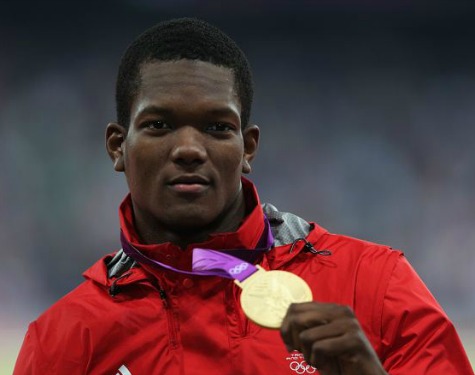 We must plan long term if we are serious about making a mark in world sport.
The consistent success that Trinidad and Tobago so dearly crave and desire will not happen because we wish it. Not only must there be a long term plan but with it we must have discipline and patience.
To be the greatest of all time, to be an Olympic champion is an undistilled passion for thousands of sportsmen and women around the world. Here in T&T, we do have sportsmen and women who carry dreams of greatness in their hearts.
Even as I made the announcement 16 months ago that our Olympic target is 10 or more gold medals by 2024, there were no illusions that such a declaration would meet with unanimous acceptance. There would be varying responses. Positive, negative, scornful or dismissive. It didn't really matter. Nothing can be achieved unless it is first spoken.
Striving for excellence is a core Olympic value.
An Olympic gold medal has far deeper significance than just the trappings and financial rewards and the adulation.
Winning an Olympic gold medal and becoming a champion is a process, attitude and mindset.
Luck? Destiny? Purpose?
There are many opinions based on individual perspectives and experiences.
Love it, hate it, embrace it or resent it.
Being an Olympic champion has been a cherished achievement for over 2000 years.
Myth, truth, legend or mere tall tales—the pursuit of Olympic glory and victory has always gone hand in hand with producing decent honourable men and women who are deeply and unwavering patriotic.
The quest and enduring romanticism of an Olympic gold medal has surged deep within the human psyche a stirring for Olympic gold, it is the ultimate achievement for many sportsmen and women. The dream and vision of standing on the top of the Olympic podium with the gold medal around your neck and hearing your country's national anthem play and watching the national flag raising is something that words cannot describe. Not even money can adequately replicate or represent the emotions of such an experience. Priceless and invaluable memories.
Last week I attended along with other presidents from various Caribbean national Olympic committees a Rio 2016 preparation forum hosted by Carlos Nuzman, president of the Brazil Olympic Committee.
Brazil shared their vision for Rio 2016 and beyond. Their aspiration and intention is to finish in the top 10 of the Rio 2016 medal count.
Their strategic map and vision has been many years in the making. No matter the stumbles or failures, the Brazil Olympic Committee is focused on achieving their target.
At this particular point in time, they have around 700 athletes in their Rio 2016 programme. Their expectation is that just around 400 will be selected for Rio 2016.
There will always be arguments surrounding the social issues in Brazil. But it is undeniable that sport plays a significant role.
Olympic gold medals don’t guarantee social justice or a more equitable distribution of national wealth.
But as many athletes in Brazil set sight and focus on Rio 2016. The Olympic Games is a symbol of their country’s effort to achieve its full potential.
Here, our present and future Olympians are just as determined and focused on achieving their best in Rio 2016 and beyond.
We may not have the resources of a Brazil but I have no doubt that we can match any country in respect of determination and will power.
Rio 2016 is very much in focus and on the radar.
Last week’s visit to Rio as a guest of both the Brazil Olympic Committee and the Rio 2016 Organizing Committee was a timely reminder that the margin for error is razor thin.
Rio is in a race against time but they aren’t alone. Many other countries will themselves be leaving no stone unturned in the push for Olympic glory.
Brian Lewis is the president of the T&T Olympic Committee. The views expressed are not necessarily those of the Olympic Committee.
Translating belief into support for sport | Things that Matter Column
Public and media opinion seem to be squarely in the corner of T&T sport. Everyone appears to agree that sport can do wonderful things for this country.
Opinion surveys will probably show that public sentiment and mood is that our sportsmen and women and national sport organisations must be financially supported. Nowhere is there anything but overwhelming support.
No matter where you go, the prevailing opinion is that sport can play a major role. No argument. As far as the majority is concerned, there is a vision for the role of sport in T&T. Why isn’t that strong vision and overwhelming support not translating into financial support?
Some have argued that sport here is suffering from a lack of respect for process and structure. In the absence of a systematic disciplined way of doing things, there is no way a coherent implementation plan can be put in place.
How can there be oversight responsibility if every chief, cook and bottle washer run in different directions all hell bent on doing their own thing?
How do we build respect for process and structure, develop more organised structures and work within guidelines? It cannot be done helter skelter.
There are a number of groups and organisations doing excellent work within local sport. Loads of money appear to be floating around. So why is sport struggling to attract funding? Is it a perception or a reality?
There are those who suggest that within sport, funding is not going to the people and groups doing the best work with a proven track record. How do you separate fact from fiction?
What can’t be denied is that sport in T&T is in need of funding.
Where is it going to come from and who will provide it?
If you want an excellent example of a sport programme that most people feel deserving of support, the Eddie Hart Football League is one.
I attended the opening of the Eddie Hart League at the Tacarigua savannah on Sunday. The League is celebrating its 48th year.
The enthusiastic gathering included Member of Parliament for Tunapuna and Minister of Foreign Affairs, the Honourable Winston Dookeran, chairman of the Tunapuna/Piarco Regional Corporation, alderman Edwin Gooding and deputy chairman Esmond Forde and justice Sebastian Ventour.
The gathering highlighted the power of sport to cross the divide, be it politics, class, social standing, race and religion.
The vision and energy of the league’s founder remains undiminished, notwithstanding the fact—as he alluded to in his address—that there are many obstacles and tribulations.
That Hart has championed the cause of the League for 48 years is a reflection of his indomitable will and passion for sport, the community of Tunapuna, football, the young men and women and children who participate in the league.
The presence of the Police and Prison bands and steel bands created a patriotic Trinbagonian ambience.
The march past had a variety of displays, some more creative and precise than others. The exhibition match between two Pro League teams Massy Caledonia Aia and San Juan Jabloteh signaled a message that sport has no borderline.
However, one couldn't help but sense an undertone of frustration at the fact that the League is still in an annual struggle to attract the funding and financial support that is needed.
It no longer makes sense to ask why.
The real question may well be: Why do we tolerate and accept these contradictions in our society?
Sports and athletes the big losers again - Things that Matter column
 Pressure...real pressure and stress. I’m blindsided by the scale and enormity of what is unfolding in the public domain.
Many people involved in sport in T&T are feeling uncertain; some despondent, with their trust betrayed.
Two years away from the Rio Olympics—new Minister, new Permanent Secretary, new deputy Permanent Secretary, new SportTT CEO and Board.
The saving grace is that national sport organisations (NSOs) charged with governing, managing and administrating their respective sports are still fairly stable and must now step up to the plate and ensure that the negative aspects are calmly navigated.
The current debacle highlights the importance of the Ministry of Sport and the Sport Company of T&T understanding that their role and responsibility isn’t to run sport and assume the role and responsibility of the national sport organisations.
The NSOs are the sport leaders and sport managers. Many have asked, “Where do we go from here?”
There is no choice but to face the pain, difficulties and hardships. Cast aside all the hindrances and the past imperfections.
The beauty and power of sport as a force for good will live on after the trouble and distress; the difficulty and pain of betrayed trust.
We need a fresh start for sport. Clipped wings can grow again.
It is always darkest before daylight. There is a silver lining behind every gray cloud.
On the grayest of days there is the gleam of sunlight.
To overcome shame and remorse requires courage and rebuilding of trust.
Cast aside all regret, trials and tribulations and press on to the summit.
Sport is a positive force for good.
No weapon formed against sport will prosper.
Our youth and young people who possess God given athletic talent and potential must have the opportunity to fulfill their potential.
The positive power of sport will not be defeated. A fresh start for sport in T&T is imperative, because in adversity, failure and disappointment can be found the seed of opportunity and progress.
The clouds will clear.
Be resilient, persistent; be of good courage.
The power of international achievement on the Olympic and world stage is respected and recognised. T&T benefits from the positive global publicity it receives from the sporting achievement of our athletes and national teams.
Sport can make a positive and transformational contribution to the sustainable social and economic development of T&T.
Temporary setbacks don’t define the true potential; the positive, progressive and constructive reality of sport in T&T.
Integrity, honesty, fair play, courage and determination are essential and core values of sport.
Stem the tide. Be a part of the solution. Live those values. Rise up and move forward.
Don’t evade responsibility for what we do, protecting ourselves from being held accountable for the consequences of our behaviour by deflecting attention onto others.
As we walk in the dark valley fear no evil. Positive actions will change the headlines.
Leaders entrusted with the responsibility of stewardship and service in difficult times must have the answers and the action plan to navigate rough seas and danger.
Fortitude, perseverance and an indomitable spirit are the qualities required to overcome adversity.
Fear not! T&T sport shall overcome. God bless.
Volunteer, amateur no excuse for shoddy work - Things That Matter column
How do we encourage operational discipline within the national sport organisations and other sport stakeholders given that sport in Trinidad and Tobago is and will remain volunteer based and amateur?
It’s one thing to say you want to do something; it’s another thing to get it done. The fact of the matter is setting goals and having plans are just one aspect. After the goal setting and planning phase, you have to put structure in place to make it happen. That means having the resources, organisation, and processes you need to execute your strategy.
What are we doing to encourage operational discipline? The question is asked against the background that being a volunteer or an amateur is not an excuse for shoddy or inept work.
How do we put the right team in place, one with the skills, knowledge, and capabilities to accomplish the goals or objectives that are set?
Have we critically analysed our strengths and weaknesses? What are our blind spots? There are a number of things be they attitudes, mind-sets, habits, and norms that inform how we think and behave. Some of these are part of our culture but if we are to be honest, they may not necessarily be in our best interest. How do we attract the very best people and expect greatness from them?
How we develop and retain people is fundamental to sustainable success in sport. When you get your team right, you’re going to get results.
What’s working? What’s not? Is our approach the right one?
Are we building a firm platform?
There is no room for complacency.
If we want to create a culture of sustainable success we first have to appreciate that a great culture doesn’t just happen. It must be built deliberately and it’s the job of every single person within T&T sport to create a culture that says excellence.
What do we really stand for?
When people in T&T look at their sport leaders what do they see? Do our actions match our stated intentions?
Things change. Priorities change. The economy changes. The business and social climate changes. It’s important to let an organisation’s culture change too so that it doesn’t start to feel static and irrelevant to people.
It’s not easy but when something is not right we have to grapple and come to terms with it. There are changes taking place and to remain relevant national sport organisations must embrace the changes and be proactive and integrative in their thinking.
It will take a collective approach even though some of us would wish that things remain the way they were when our society was simple in the way it was structured.
The hard harsh reality is that we must adapt the timeless values and principles of sport and Olympism and make it relevant to modern society if sport is to have a bright future.
It’s not a question of selling out or adopting an approach that suggests that the end justifies the means or by all or any means necessary.
It’s about getting the right people in the right place working as a team.
It’s not only about winning medals but about helping people live better.
Sports people have the energy, ideas, creativity and above all the dreams. What we offer to T&T is an experience to be lived. We want to inspire people to improve their lifestyle and to strive for excellence in all areas of their lives. But for some reason the message is getting lost or not getting through to people.
It isn’t enough to throw up our hands in frustration and say that’s the way it is. There are no easy answers but we must certainly have the will and determination to keep searching.
I wish to extend sincere condolences to the family, friends and associates of Bertrand Doyle for his unwavering service, dedication and commitment to national life in the spheres of insurance, religion, education and sport. He made a positive difference and contributed to the development of T&T. RIP Mr Doyle.
David Owen: Ten things we learnt at Lausanne - and one salutary reminder
This was one of the busiest International Olympic Committee (IOC) gatherings I can recall – though it will be nothing on the Session in Buenos Aires in September.
As we return to our various corners of planet earth, here is a summary of what I think we gleaned from these long days beside Lake Geneva.
● Thomas Bach will dominate the remaining weeks of the IOC Presidential campaign.
Like him or not, and even his supporters exude more admiration than warmth when discussing his qualities, the man from Tauberbischofsheim can boast a truly formidable Olympic CV.
A tireless networker, a capable, if far from inspirational, public speaker and now author of a detailed, carefully thought-out manifesto, he looks a certainty to finish either first or second in the six-man race.
But he does not yet look invincible – if support coalesces eventually around one of his five rivals. This anointed anti-Bach challenger could, in effect, be chosen by the other candidates themselves, if they are prepared to strike deals ahead of the September 10 vote.
Or he could be chosen, more haphazardly, by the electorate, as successive rounds of voting whittle down the field.
The problem, from the anti-Bach perspective, of waiting until the last minute, is that the German looks capable of getting close to a majority relatively early in the poll, leaving him needing to coax votes out of only a few more of his IOC colleagues to push him over the line.
The longer opposition to Bach remains divided, the harder it will be, barring the unexpected, for any one of the other candidates to stop him.
● Sheikh Ahmad Al-Fahad Al-Sabah has underlined his status as a front-rank Olympic powerbroker.
Prior to the 2018 Youth Olympic vote, I was told on several occasions that Sheikh Ahmad had put his weight behind the Buenos Aires bid.
It follows that the South American city's victory in a poll it did not go into as favourite, will be widely interpreted as a strong sign that the President of the Association of National Olympic Committees (ANOC) and chairman of the Olympic Solidarity Commission is now a man of real influence in the Olympic Movement.
This was a very good meeting for him.
● Relations between the IOC and SportAccord President Marius Vizer are at a low ebb. This is the almost inescapable conclusion to be drawn from the absence of the International Judo Federation (IJF) President's name from a list of nine individuals nominated in Lausanne to become new IOC members – particularly as the list did include the President of the National Olympic Committee of Romania, the country where Vizer was born.
Vizer's SportAccord manifesto included the introduction of a new united World Championships, which could easily be seen as a fledgling rival to the Olympics.
Nonetheless, he would be a powerful enemy to make: this year's World Judo Championships take place in Brazil just ahead of the IOC Session in neighbouring Argentina; Vizer was joined last year at the London 2012 judo competition by Russian President - and Honorary President of the IJF - Vladimir Putin.
● The use of mainstream political leaders to help out bids, though it can be highly effective, is fraught with risk.
This was underlined in Lausanne on at least two occasions.
Medellín's efforts to win the Youth Olympic Games for Colombia were buttressed by the presence in Lausanne of Juan Manuel Santos, the Colombian President.
He duly contributed a dignified, Presidential speech to a lively presentation.
Some observers were clearly startled, though, when he alluded, in a subsequent answer, to a peace process in Cuba involving his negotiators and the guerrillas.
I doubt such an off-the-cuff remark would actually have cost Medellín votes, but I also doubt it was something Colombian bid directors planned for.
Tokyo 2020 had added Deputy Prime Minister Tarō Asō, a skeet shooting competitor at the 1976 Montreal Olympics, to its Lausanne team. An engaging character, all was going well until he mistook the word "lobbying" for the word "doping" in a question from media and launched into a rambling reply.
This was trivial in itself (though not for the poor media handlers and bid advisers); IOC members were in session elsewhere.
But it followed a sub-standard media roundtable the previous day; this is not a good time for a bid to be developing an accident-prone reputation.
● There is still life in the Istanbul 2020 bid
After a dispiriting month, a bad session in Lausanne could just about have sealed the latest Istanbul Olympic bid's fate.
But, led by the irrepressible Hasan Arat, bid chairman, the Turkish team kept its head, raised its game and unveiled a new star in the shape of Ali Babacan, the youthful Deputy Prime Minister for economic and financial affairs.
I still think some immensely stressful times lie ahead – not least if, as seems likely, it is judged necessary for Turkish Prime Minister, Recep Tayyip Erdoğan, to be present in Argentina (see comments on mainstream political leaders above).
But, whatever may be happening in the rest of the world, inside the Olympic bubble there is emphatically no recession.
If this bid is to be tripped up, I still think it is more likely to be on concerns regarding security and/or project management prowess than because IOC members judge its relatively high cost to be out of keeping with the spirit of the times.
● Tokyo must find a way of regaining momentum quickly
For all the Japanese team's efforts, for all the bid's manifest qualities – of which a Mount Fuji-sized $4.5 billion (£3.1 billion/€3.5 billion) cash mountain is far from the least – I still detect scant excitement among IOC members at the prospect of returning to Tokyo after 56 years.
In Switzerland, I got a sense of growing frustration that the message just does not seem to be getting across, which might account for the slightly Keystone Cops flavour now in danger of enveloping the bid.
In practical terms, Tokyo desperately needs a convincing anchor speaker to bring to its final presentation precisely the passionate gravitas that Seb Coe summoned up eight years ago for London 2012.
In this context, I wonder whether August 11, 2012 may come to be seen as a key date in the campaign.
This was the day Koji Murofushi, a gold medal-winning hammer thrower was disqualified from the IOC Athletes' Commission election. Murofushi, a commanding stage presence, with good English and a relaxed yet dignified demeanour, could potentially have delivered that almost mystical Olympic edge that Coe gave to London.
Though the Court of Arbitration for Sport (CAS) concluded eventually that Murofushi's reputation and integrity as a sportsman remained completely untarnished, it is hard to see how Tokyo 2020 can make much use of him now.
In any event, he is not an IOC member – a fact underlined when Danka Barteková and James Tomkins, two of the four winners in that controversial election, played a small part in formalities for the 2018 Youth Olympic Games vote.
● Madrid is on a roll
Buoyed by the boost that fate, in the shape of the recent protests in Brazil and Istanbul, has handed them, the Spanish bid took full advantage in Lausanne, serving up crisp, no-nonsense sound bites for the media and a royal superstar - Felipe, Prince of Asturias - for the IOC.
Just about the only thing that could have gone better was the Thursday morning event in the majestic Palace hotel, when the three 2020 rivals exhibited their bids for a few hours in adjacent rooms named after prominent local personages/institutions.
The Spanish capital was allotted the Salon Sir Peter Ustinov for this task, while the Salon Olympique - clearly the most apt title - went to Istanbul.
Prince Felipe and his colleagues have not won yet, though: their "realistic bid for realistic times" will come under more scrutiny now - and I am still not convinced that the low-cost option will hold quite as much appeal for IOC members in their comforting cocoon of sponsorship and broadcasting dollars as some think. ● Mike Lee has still got it.
Buenos Aires's win added to the British bid adviser's lengthening list of Olympic victories.
His company Vero's input was just one of a list of ingredients contributing to the Argentinean city's recipe for success.
And this was less high profile a campaign than some of the Summer/Winter Olympic, and for that matter World Cup, bids Lee has been involved in.
I think, nonetheless, that I detected his influence at work at certain key junctures, not least when the Argentine Olympic Committee (COA) was quick to distance itself from a controversial advert featuring the Falkland Islands in the run-up to London 2012.
"It was the right bid for the city at this time," Lee told me after the vote, heaping praise on all elements of the bid and those responsible.
But the bear hug between him and COA President and IOC member Gerardo Werthein after the result was announced spoke volumes about how much his contribution was valued.
● These are strange days for IOC insiders.
They know, clearly, that change is on the horizon, but cannot be sure what form it will take.
This made for an odd atmosphere in Lausanne, the Olympic capital.
Whether this is direct cause and effect is unclear, but the bureaucrats seem to have fallen back on an instinct for privacy that would not look out of place in the British civil service.
Not only the 2020 presentations, but also the speeches of the six men vying to become the next global figurehead of the Olympic Movement were behind closed doors, for reasons that not even IOC members seemed able to articulate.
This would be fine in most private clubs, but the IOC shows every sign of revelling in its unprecedented international prominence.
As some Presidential candidates at least appear to appreciate, this stature imposes what should amount to an obligation on the IOC to foster maximum transparency as it goes about its business.
The ninth IOC President will need to look and sound convincing on camera.
I am baffled as to what was to be gained by keeping the cameras at bay as the Presidential contenders made their first formal pitch to IOC colleagues. ● Recession, what recession?
We have heard plenty in recent weeks on how Big Sport needs to come to terms with the new realities; I may have been responsible for some of the preaching along these lines myself.
But, actually, whenever you enter the cushioned corridors and geranium-fringed walkways inhabited by the real movers and shakers, the trials and tribulations of everyday life start to appear impossibly remote.
While much of the rest of the world suffers, it is worth remembering that Olympicland will have its activities funded, in large part, over the next three years by the fruits of commercial contracts inked before the boom turned sour.
Has the IOC been shaken into curbing its recent appetite for grandiose projects?
I am less persuaded of this than I was a week ago.
● A salutary reminder
Seeing the pain and disappointment in the eyes of the Glasgow 2018 Youth Olympic bid team after their elimination served as a jolting reminder of the heavy emotional toll this unpitying industry can take.
They had not put a foot wrong that I could see, but in the Olympic world, as elsewhere, you cannot push water uphill.
This was just not their time. Nothing they might have done would have changed that. End of story.
The good thing is that, not only will they have lifted their city's stock of goodwill for next time, whenever next time is, but they were able to fall back on the good offices of British IOC vice-president Sir Craig Reedie and wife Rosemary to ensure that they spent a memorable day in the Olympic citadel even so.
It was typical of the Reedies that they should set aside their own disappointment to do this.
Such gestures, from people whom you would not blame for adopting a much more high-handed attitude, help you remember that, when all is said and done, we are better off with the Olympic Movement than without it.
David Owen worked for 20 years for the Financial Times in the United States, Canada, France and the UK. He ended his FT career as sports editor after the 2006 World Cup and is now freelancing, including covering the 2008 Beijing Olympics, the 2010 World Cup and London 2012.